
The Benefits of Aleppo Soap: What It Really Does for Your Skin
Aleppo soap draws its benefits from just two ingredients: olive oil, which nourishes the skin and softens the effect of washing, and laurel berry oil, which purifies and soothes. It cleanses without stripping, suits the whole family and replaces several hygiene products on its own.
Where do the benefits of Aleppo soap come from?
A genuine Aleppo soap contains only four elements: olive oil, laurel berry oil, vegetable soda and water. No synthetic fragrance, no preservative, no foaming agent. This simplicity is not a marketing argument: it is what explains how well Aleppo soap is tolerated by reactive skin, since there is almost nothing in it for the skin to react to.
Olive oil: nourish and protect
It forms the base of the soap, between 65 and 100% depending on the range. Rich in fatty acids and vitamin E, it nourishes deeply and leaves a thin oily film on rinsing, which softens the drying effect of washing. This is what gives Aleppo soap its superfatted feel and that sensation of softness after rinsing, rather than skin that feels tight.
Laurel berry oil: purify and soothe
This is the ingredient that sets Aleppo soap apart from all other soaps, Marseille soap included. Rich in fatty acids and natural antiseptic agents, laurel oil purifies, soothes itching and limits bacterial proliferation. Its concentration determines the soap's character: the higher the percentage, the more purifying the soap.
Cellar drying: what changes everything
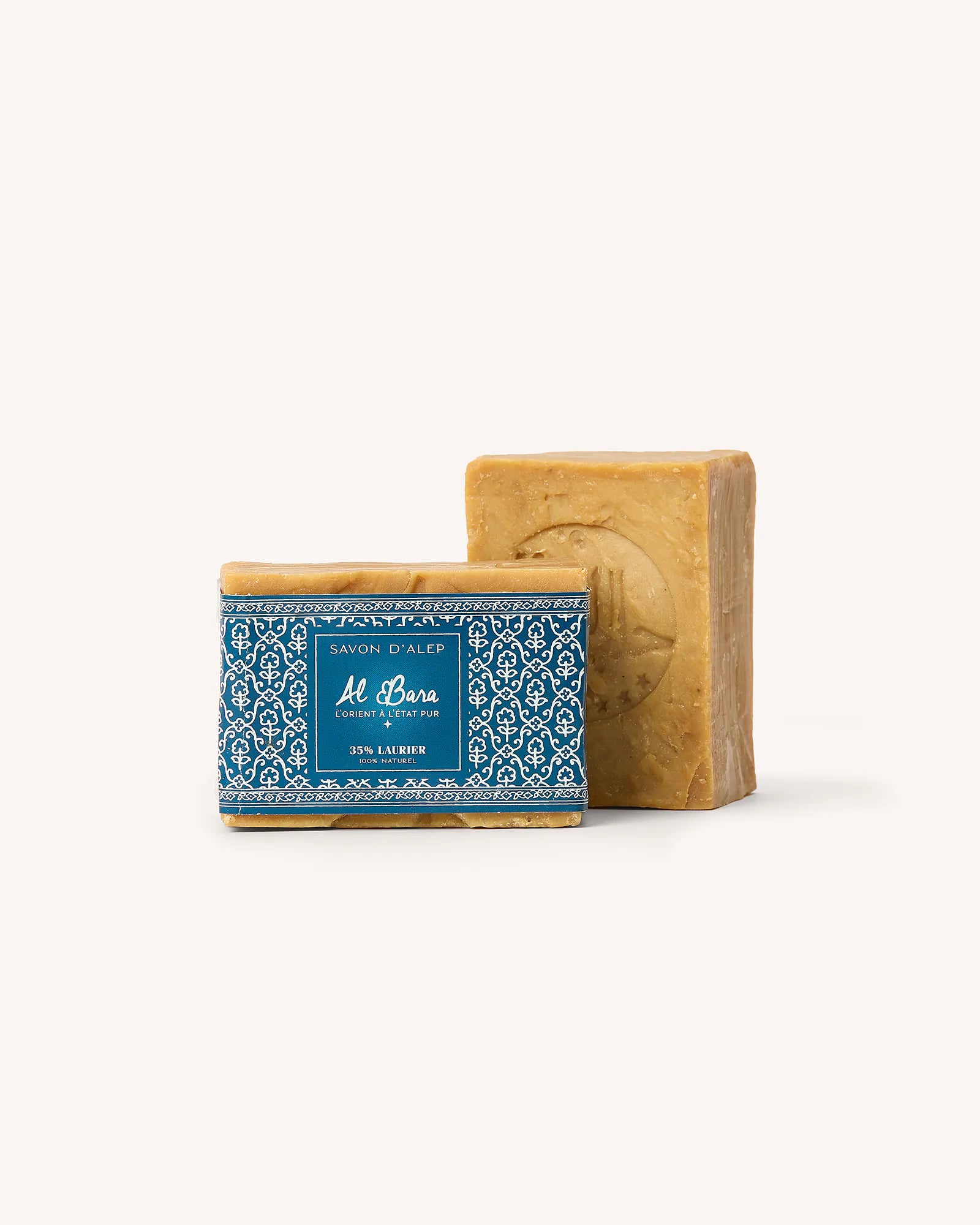
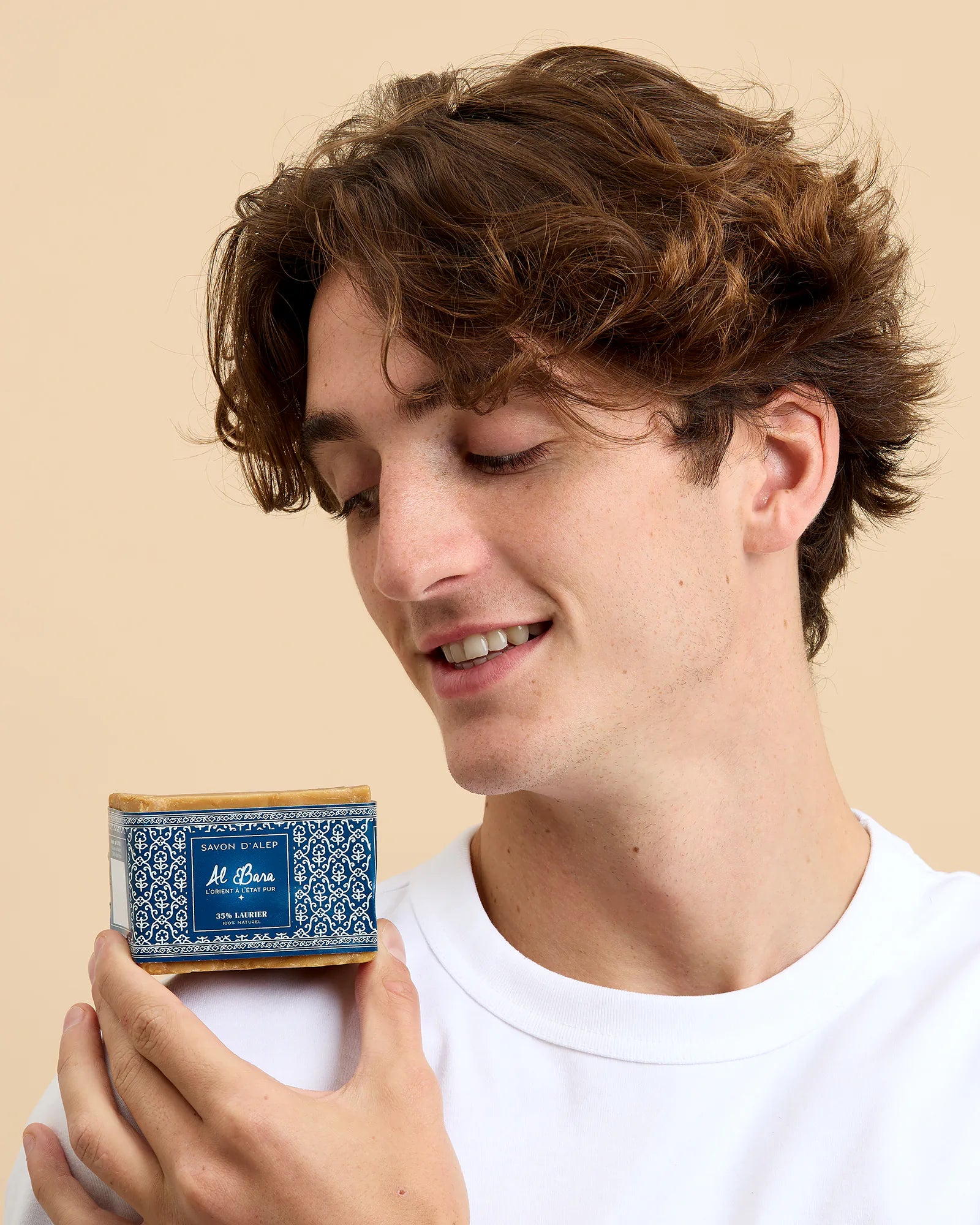
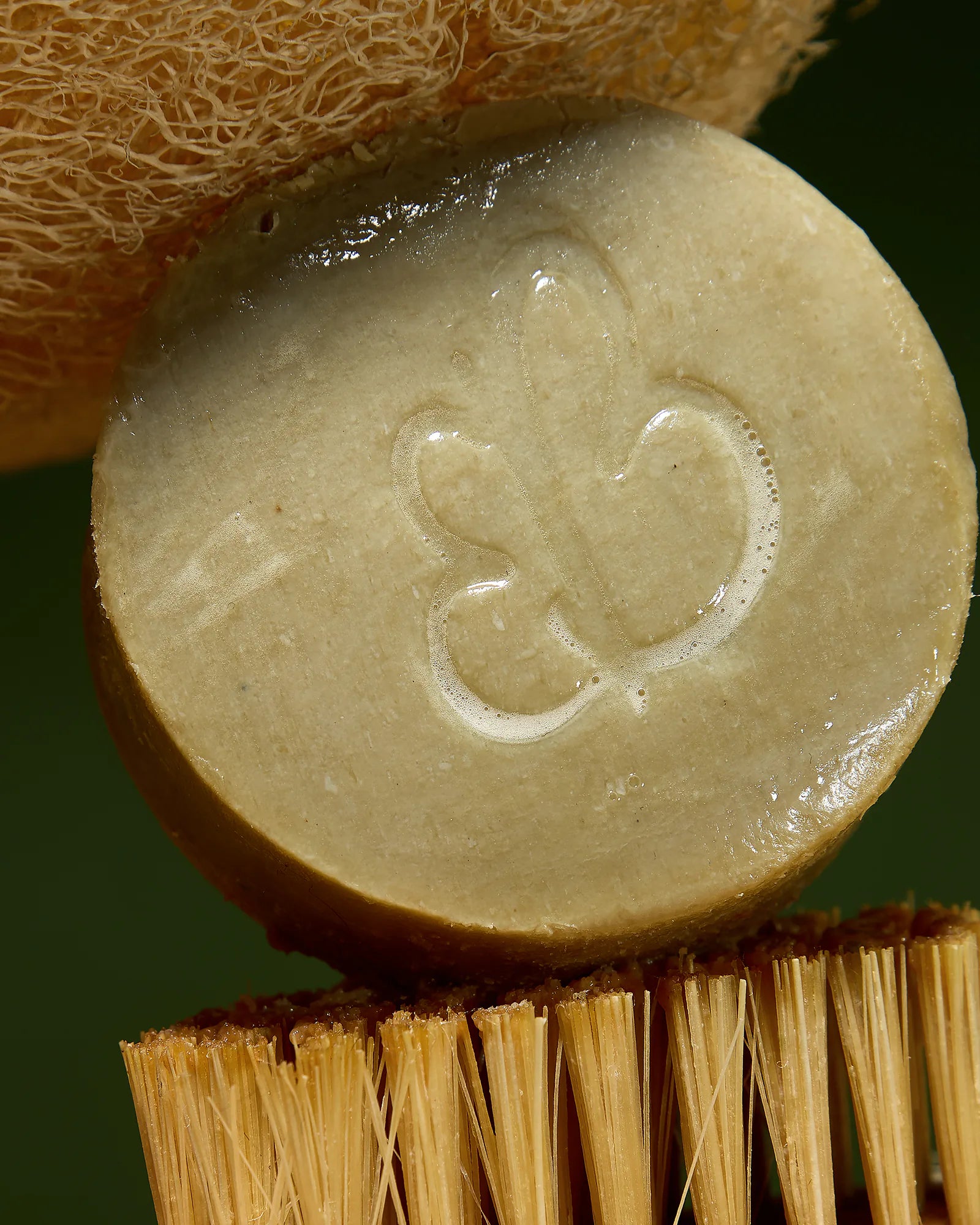
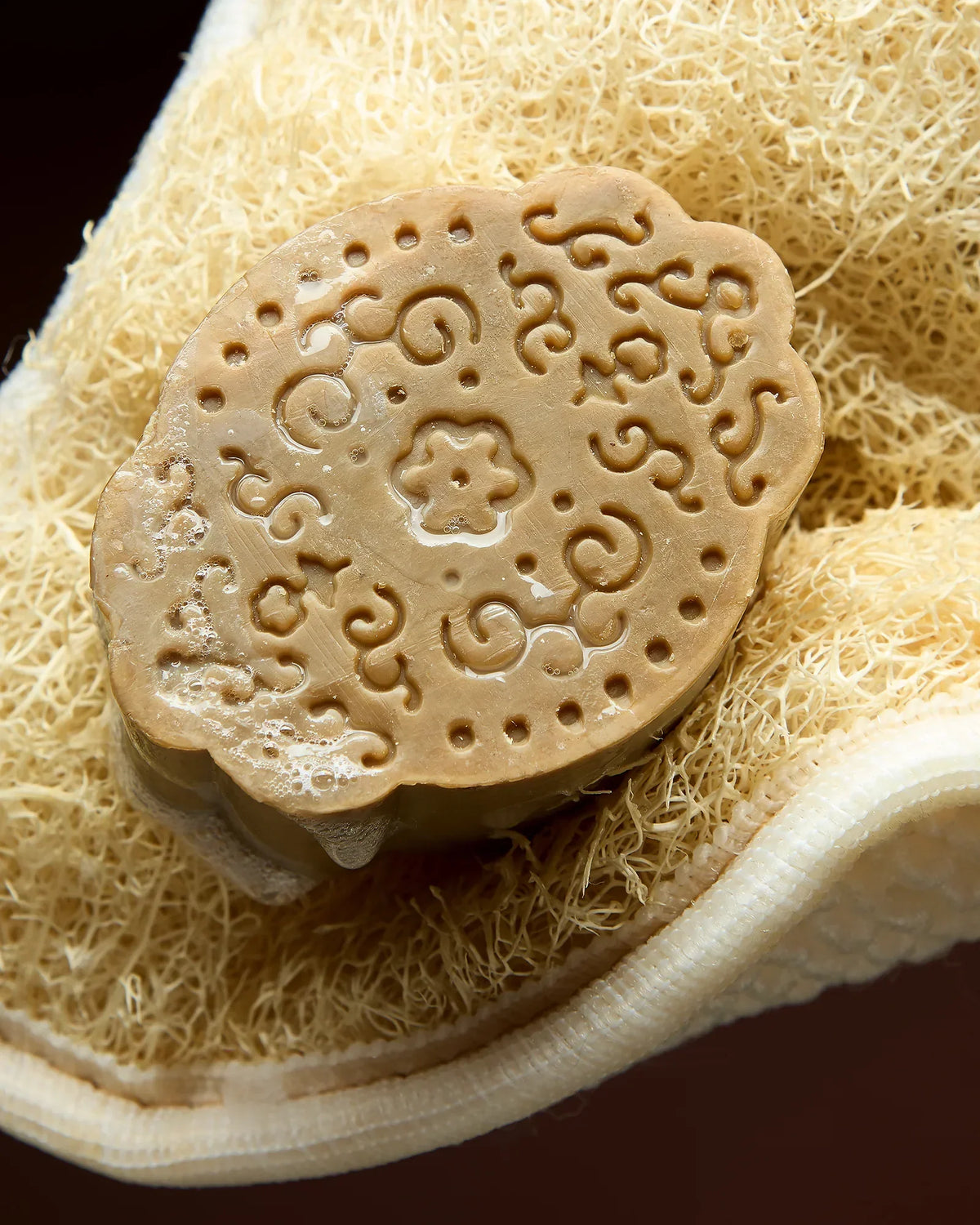
After cauldron cooking and stamping, the blocks dry naturally for many months. This ageing lowers the soap's pH and concentrates its properties. It is also what produces the visual signature of an authentic Aleppo soap: golden brown on the outside, emerald green at the core. A soap sold too young is more aggressive — patience is part of the formula.
The benefits according to your skin type
Aleppo soap does not act the same way on every skin. The laurel percentage is the dial that adapts its benefits to your profile.
| Your skin | What Aleppo soap brings it | Suitable range |
|---|---|---|
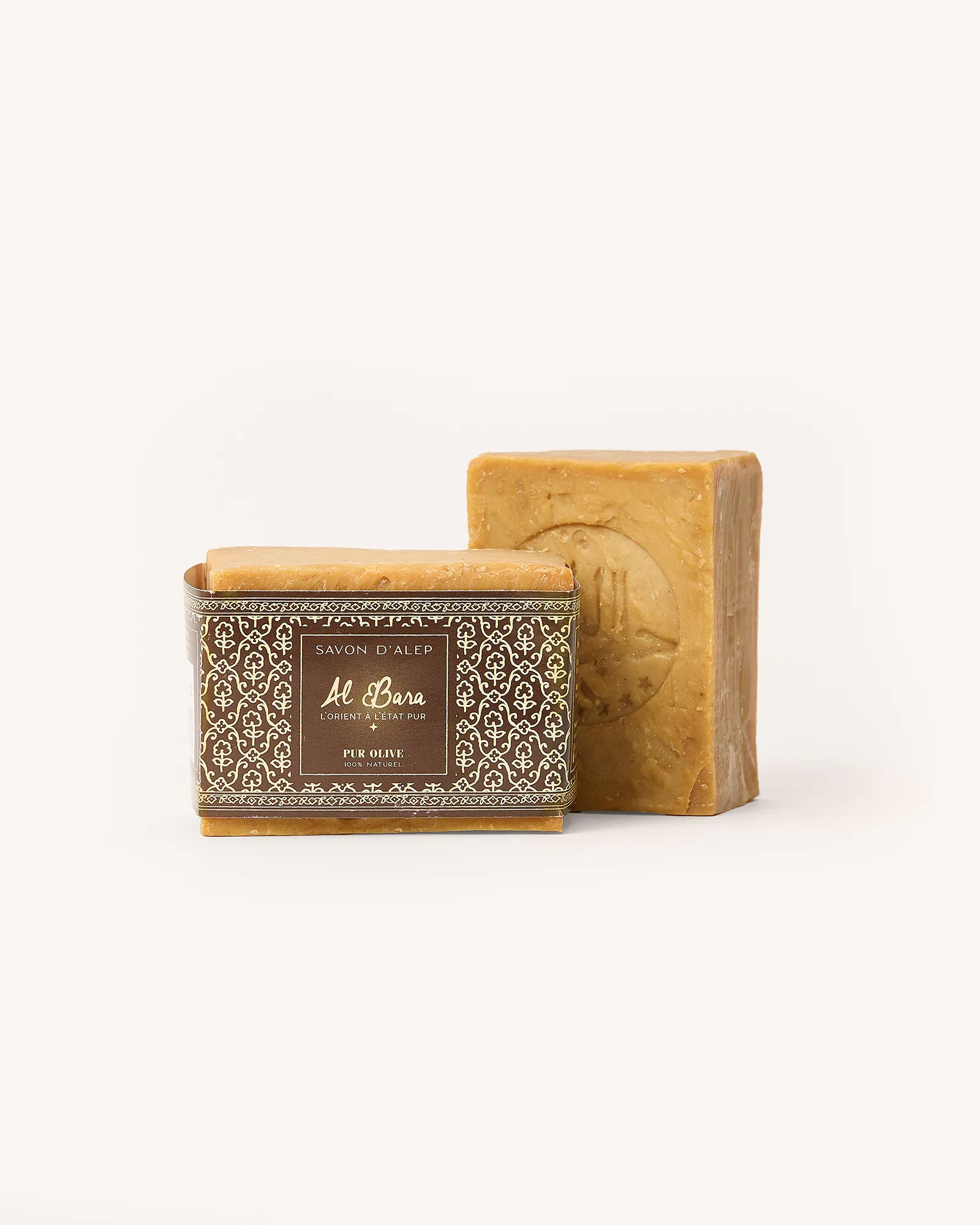
| Dry, sensitive or reactive | Nourishes deeply, cleanses without aggression, helps soothe tightness and feelings of discomfort | Pure Olive |
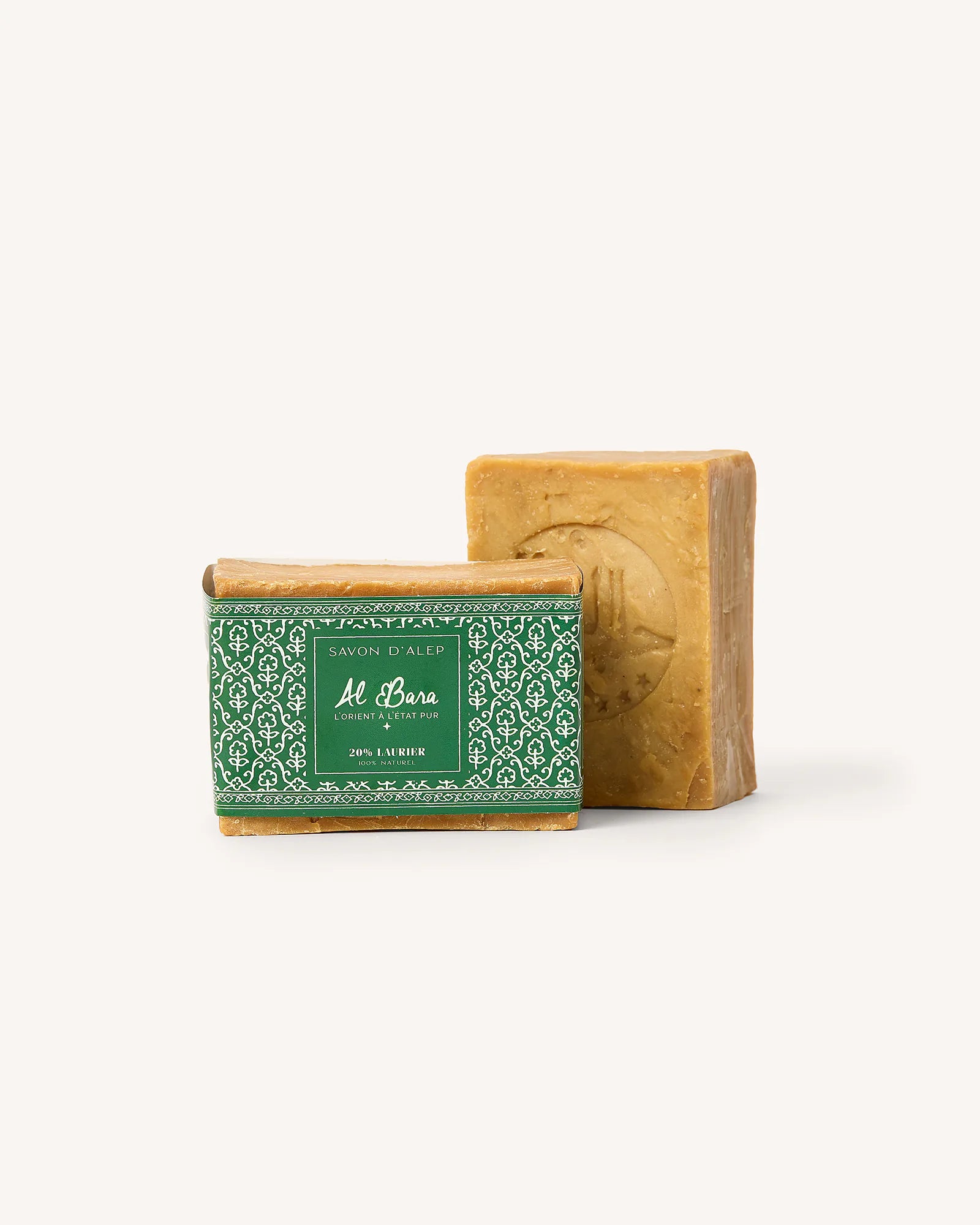
| Normal to combination | Cleanses gently every day, respects the natural balance, can be used on the face as well as the body | 20% Laurel |
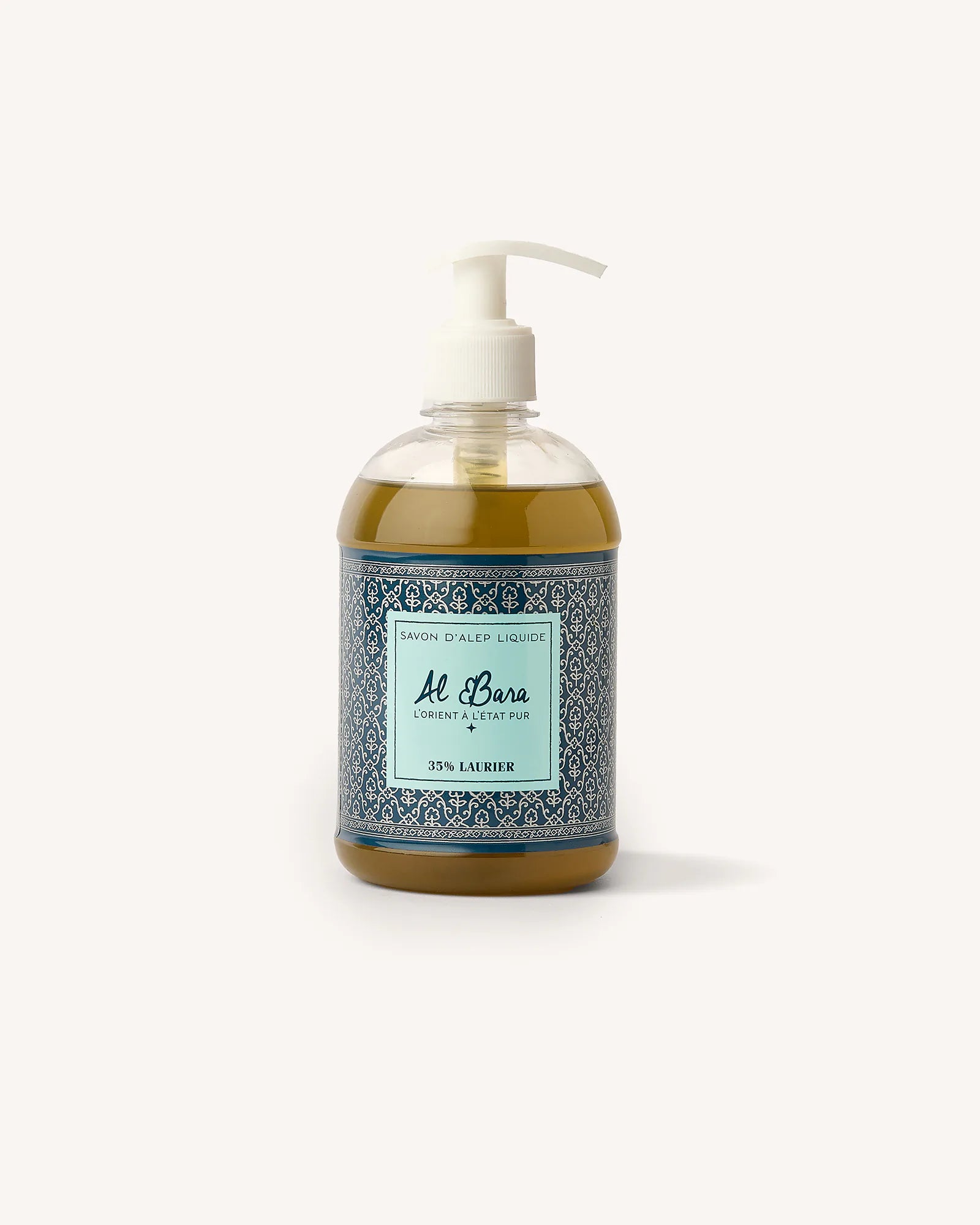
| Oily or blemish-prone | Purifies deeply, helps regulate excess sebum and limit the appearance of spots, without drying out | 35% Laurel |
A single soap is enough for face, body and hair. This is one of the most concrete advantages of Aleppo soap: it replaces shower gel, face cleanser and, for many, shampoo. You can discover our genuine Aleppo soaps and compare the three ranges.
Problem skin: what Aleppo soap can and cannot do
This is the subject on which precision is required. Aleppo soap is a hygiene product, not a medicine. It replaces no treatment and makes no condition disappear. What it does is cleanse without adding aggression to already fragile skin — and on problem skin, that is far from negligible.
Eczema and atopic skin
This is the case where the most caution is needed, and where our answer is the most nuanced. The complete absence of fragrance and preservatives removes frequent irritation triggers from the equation. But Aleppo soap remains an alkaline soap, and patient associations advise against it in case of eczema. We have devoted a full article to this question, without sidestepping the objections: Aleppo soap and eczema, what to know before trying.
Acne and oily skin
The 35% Laurel cleanses deeply without stripping. It helps regulate excess sebum and limit the appearance of spots, while preserving the skin's natural balance — whereas many anti-acne cleansers dry the skin so much that they trigger sebum overproduction in reaction.
Psoriasis and fungal infections
On skin prone to psoriasis, the minimalist composition of Aleppo soap helps limit the irritation linked to daily cleansing. The natural antifungal properties of laurel oil also make it a useful complement for the hygiene of skin prone to fungal infections. In both cases, it is a support, never a solution.
In case of a diagnosed skin condition, ask your dermatologist before changing your cleansing product. For babies and young children, the paediatrician's advice remains the reference.
Beyond the body: face, hair and small cuts
On the face
Superfatted and additive-free, Aleppo soap can be used as a face cleanser morning and evening. It helps tighten pores and leaves the skin clean without the film some cleansers leave behind. On sensitive skin, prefer Pure Olive or the 20% Laurel, and rinse thoroughly with lukewarm water. The complete instructions, routine and mistakes to avoid are in our guide Aleppo soap for the face.
As a gentle shampoo
Used on hair, Aleppo soap soothes sensitive or irritated scalps and helps reduce dandruff. It cleanses without aggression and is particularly suited to itchy scalps. Be aware, though: switching to a solid soap requires an adaptation period and an acidic rinse. Everything is detailed in our guide washing your hair with Aleppo soap.
After shaving and on small cuts
Its gentle antiseptic properties help clean scrapes and small shaving nicks. A discreet use, but one many of our customers adopt first.
Which Aleppo soap for which benefit?
If you are still hesitating, the rule is simple.
- Pure Olive — the most nourishing. Very dry, sensitive and reactive skin. For babies, ask your paediatrician.
- 20% Laurel — the balance. Normal to combination skin, daily use for the whole family, children from three years old.
- 35% Laurel — the most purifying. Oily and blemish-prone skin.
To go further in choosing the laurel percentage, see our guide 20% or 35% laurel: how to choose.
Frequently asked questions
What are the benefits of Aleppo soap?
It nourishes the skin thanks to olive oil, purifies and soothes it thanks to laurel oil, and cleanses without stripping. Its four-ingredient composition makes it well tolerated by many sensitive skins, and a single block replaces shower gel, face cleanser and shampoo.
What is Aleppo soap used for?
For the daily washing of face and body, as a gentle shampoo, as shaving lather, and as a complementary care for dry or blemish-prone skin. Flakes made from the same paste are also used to make homemade laundry detergent, a traditional use in Aleppo.
Does Aleppo soap dry out the skin?
No, but its pH is alkaline, like that of every true soap. Some skins feel a slight tightness during the first uses, while the skin adapts. Rinse thoroughly, do not let the soap sit on the skin, and choose Pure Olive if your skin is very dry. If the tightness persists beyond two weeks, reduce the frequency. We explain the role of pH in detail in what is the pH of Aleppo soap.
How long before you see the effects?
Allow two to three weeks of regular use. The feeling of comfort after the shower is noticeable from the first days, but the effects on the skin's appearance — cleansing of oily areas, soothing of redness — take the time of a full skin cycle.
Read more
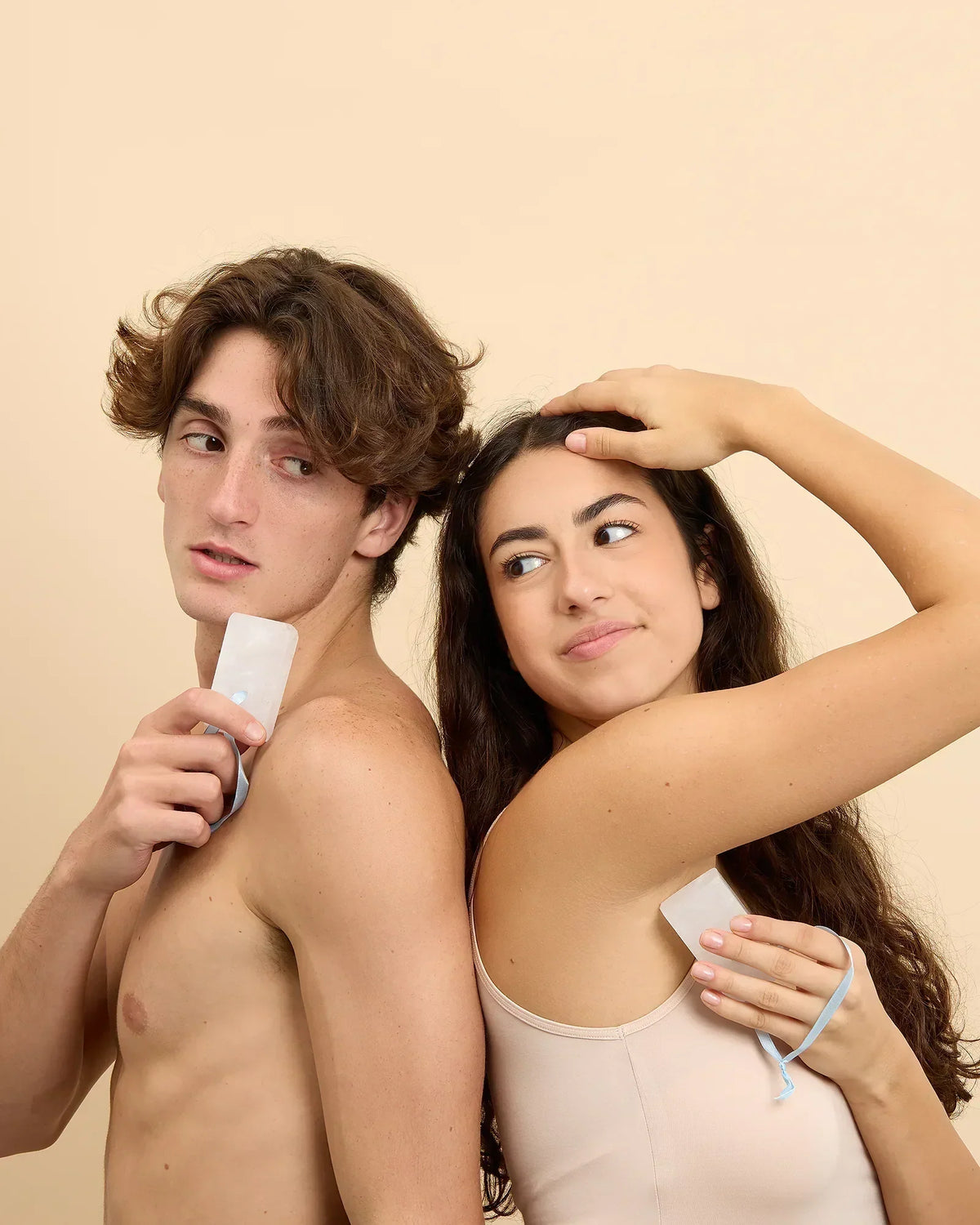
Is alum stone aluminum-free? Is it effective against perspiration? All the clear answers about this ancient natural deodorant used since antiquity.
Aleppo soap has an alkaline pH between 9 and 10. Discover why this is not a problem for most skin types, how to rinse properly to protect your hydrolipidic film, and which soap to choose according ...