Aleppo soap and eczema: what to know before trying it
Let's say it upfront: Aleppo soap is not the cleanser of choice for eczema, and we will not present it as such. It is an alkaline soap, and dermatologists and patient associations alike recommend something else. Here is why the question comes up so often, what the official position says, and in which specific cases some people get on with it nonetheless.
The short answer
Aleppo soap does not treat eczema. No soap does. Atopic dermatitis is a chronic inflammatory disease that calls for medical follow-up, and the role of a cleansing product is limited to cleaning the skin without adding aggression.
On that specific ground, Aleppo soap has a real advantage — a four-ingredient composition, with no fragrance or preservative — and an equally real drawback: its alkaline pH. Depending on the skin, one outweighs the other. There is no universal answer, and your dermatologist is the one in a position to decide for your case.
The pH problem, explained simply
Healthy skin is slightly acidic: its pH sits between 4.5 and 5.5. This acid mantle is part of its protective barrier. On atopic skin, that barrier is already weakened — this is the central mechanism of the disease.
Yet every true soap is alkaline. It is inherent to saponification: the reaction between a fat and a base produces a soap whose pH exceeds 8. Aleppo soap sits between 9 and 10, Marseille soap slightly above. We go into this in our article on the pH of Aleppo soap.
It is on this basis that the Association Française de l'Eczéma considers alkaline soaps, Aleppo soap included, as “totally inadvisable for people with eczema”. We will not sidestep this position: it comes from the reference organisation on the subject in France, and anyone looking for a soap for eczema-prone skin deserves to know it.
What dermatologists and patient associations recommend
The consensus is clear, and it does not point to our products. For eczema-prone skin, the recommendations are:
- syndets — soap-free cleansers — or cleansing oils
- a pH close to that of the skin, around 5
- a superfatted formula, enriched with fatty agents
- fragrance-free, colourant-free and, if possible, preservative-free
- applying an emollient immediately after washing, on still-damp skin
Al Bara does not make syndets. Our range is made of saponified, therefore alkaline, soaps. We would rather tell you than let you find out after purchase: if you are looking for the cleanser your dermatologist would recommend for atopic dermatitis, you will not find it here.
So why do so many people use Aleppo soap?
Because pH is not the only parameter at play, and the question of allergens matters too.
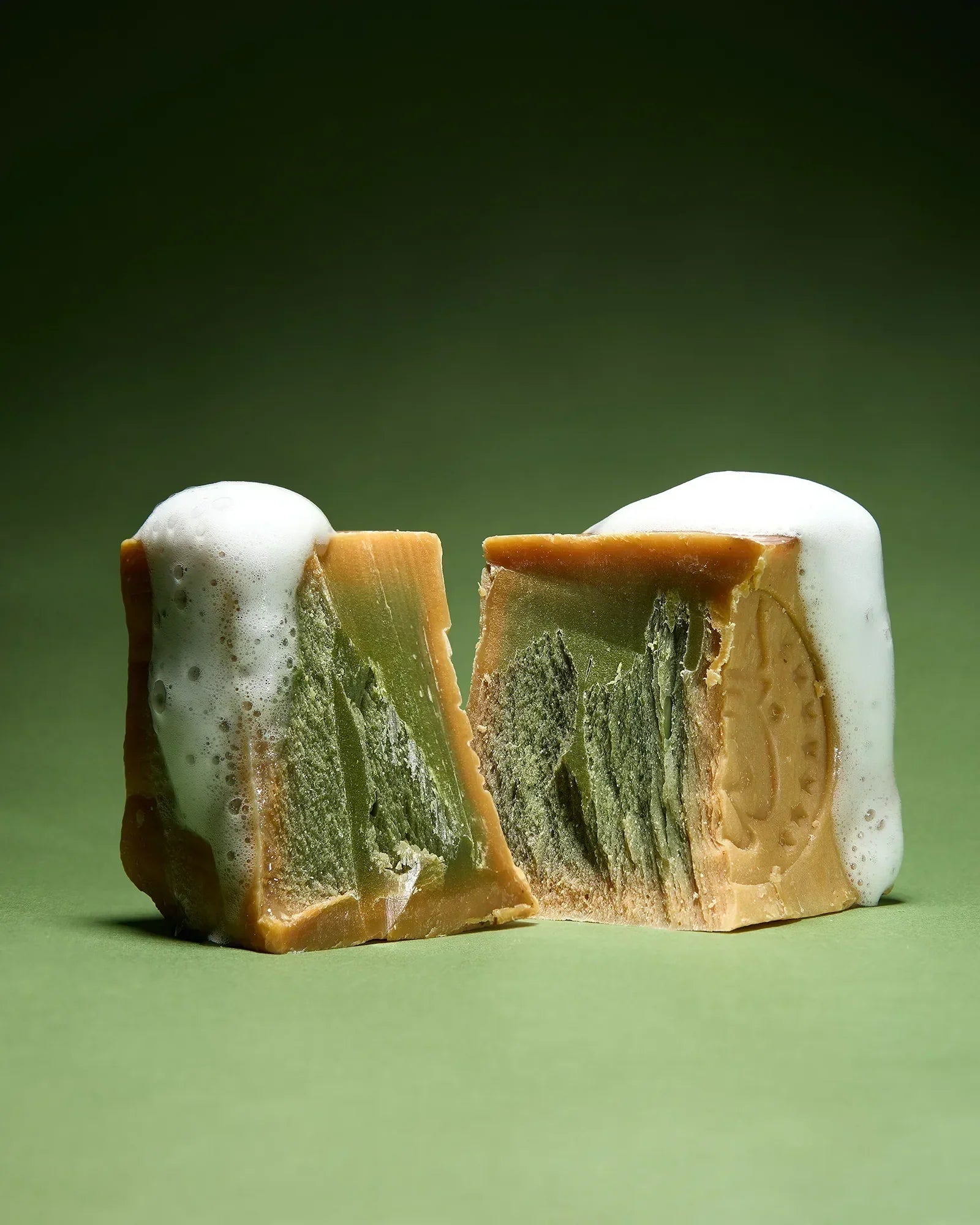
A genuine Aleppo soap contains olive oil, laurel berry oil, vegetable soda and water. Nothing else. Synthetic fragrances are among the leading causes of contact eczema, and preservatives such as methylisothiazolinone are documented allergens. A four-ingredient formula mechanically removes these triggers from the equation.
Then there is the superfat: the olive oil is not fully saponified, and the free fraction leaves a thin oily film on rinsing. This is why Aleppo soap feels less stripping than many foaming shower gels, despite its pH.
These two elements explain the positive feedback we receive from customers with sensitive skin. They do not cancel the pH objection, and they do not hold for everyone — in particular not during a flare-up.
When to avoid it
This list is not a stylistic precaution. Each point corresponds to a situation where Aleppo soap can worsen discomfort.
- During a flare-up. On inflamed skin, the alkaline pH adds aggression to an already broken barrier.
- On open or weeping lesions. Wait for complete healing.
- If your dermatologist has advised against soaps. Their opinion overrides anything you read here.
- For infants and young children with atopic skin. We make no recommendation in this case: the question belongs to the paediatrician, and to them alone.
- If your skin is very dry and feels tight for a long time after washing, whatever the soap.
If you want to try anyway
Some people with atopic skin, outside flare-ups, get on with Aleppo soap. If that is you and you wish to test it, here are the precautions that limit the risk.
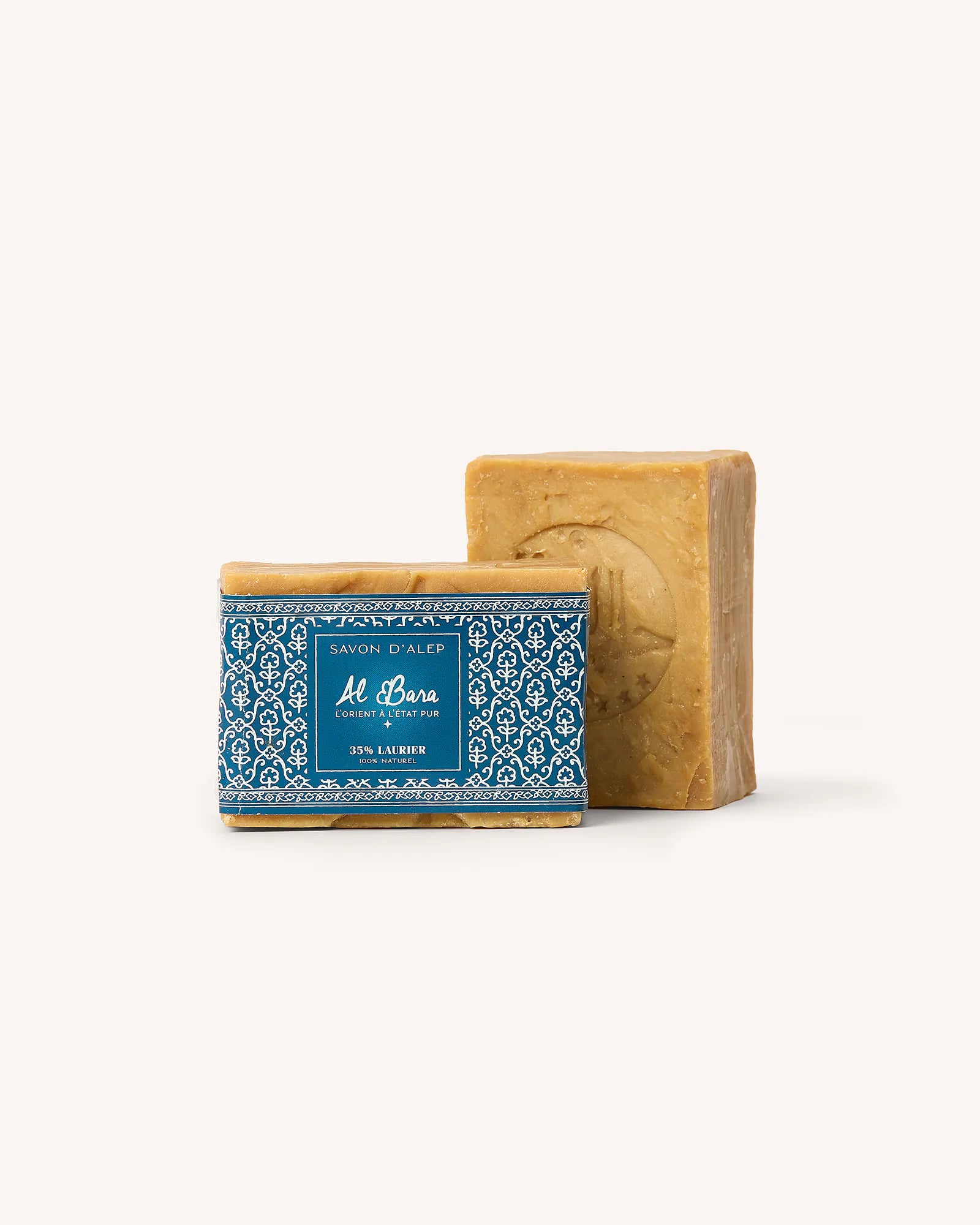
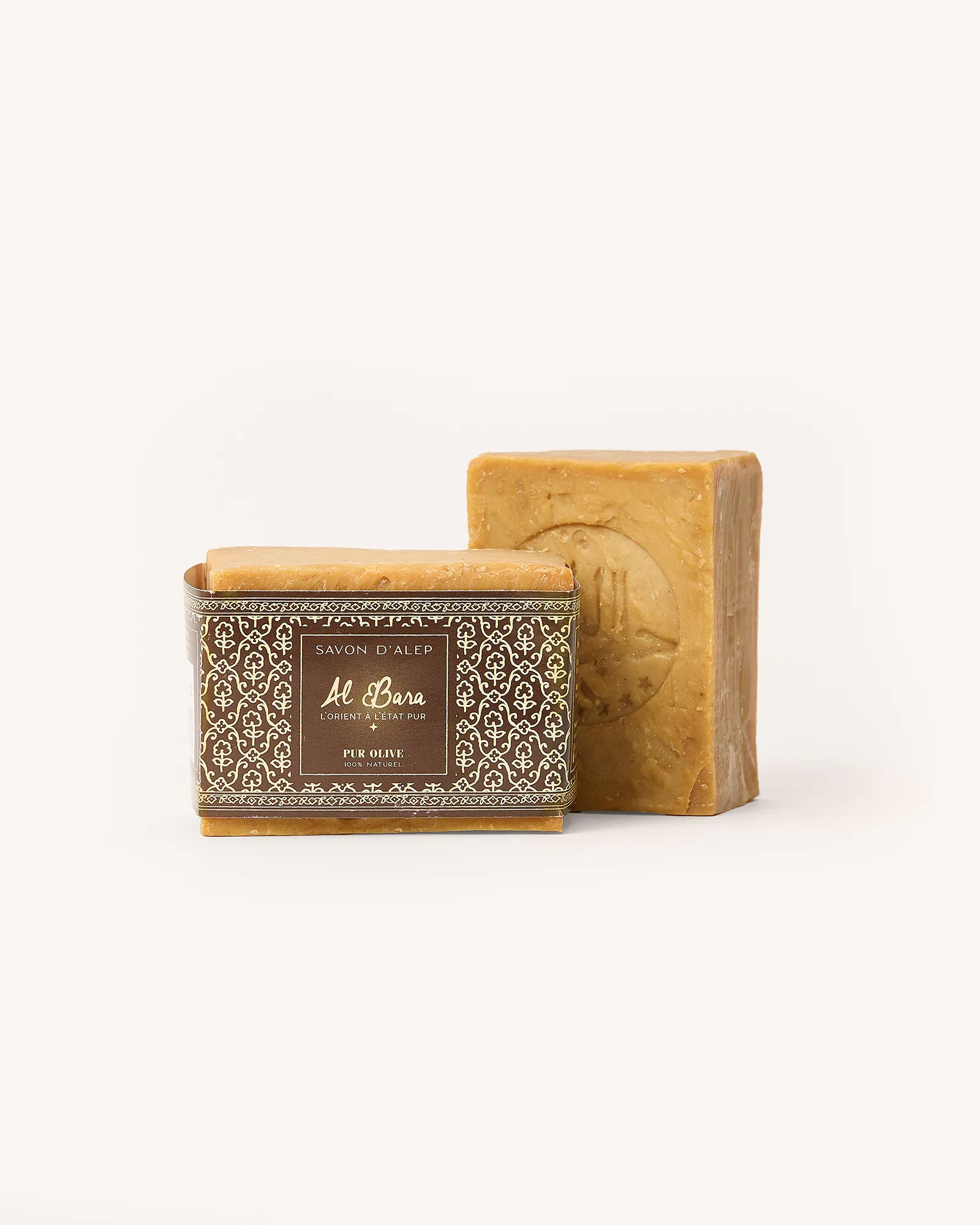
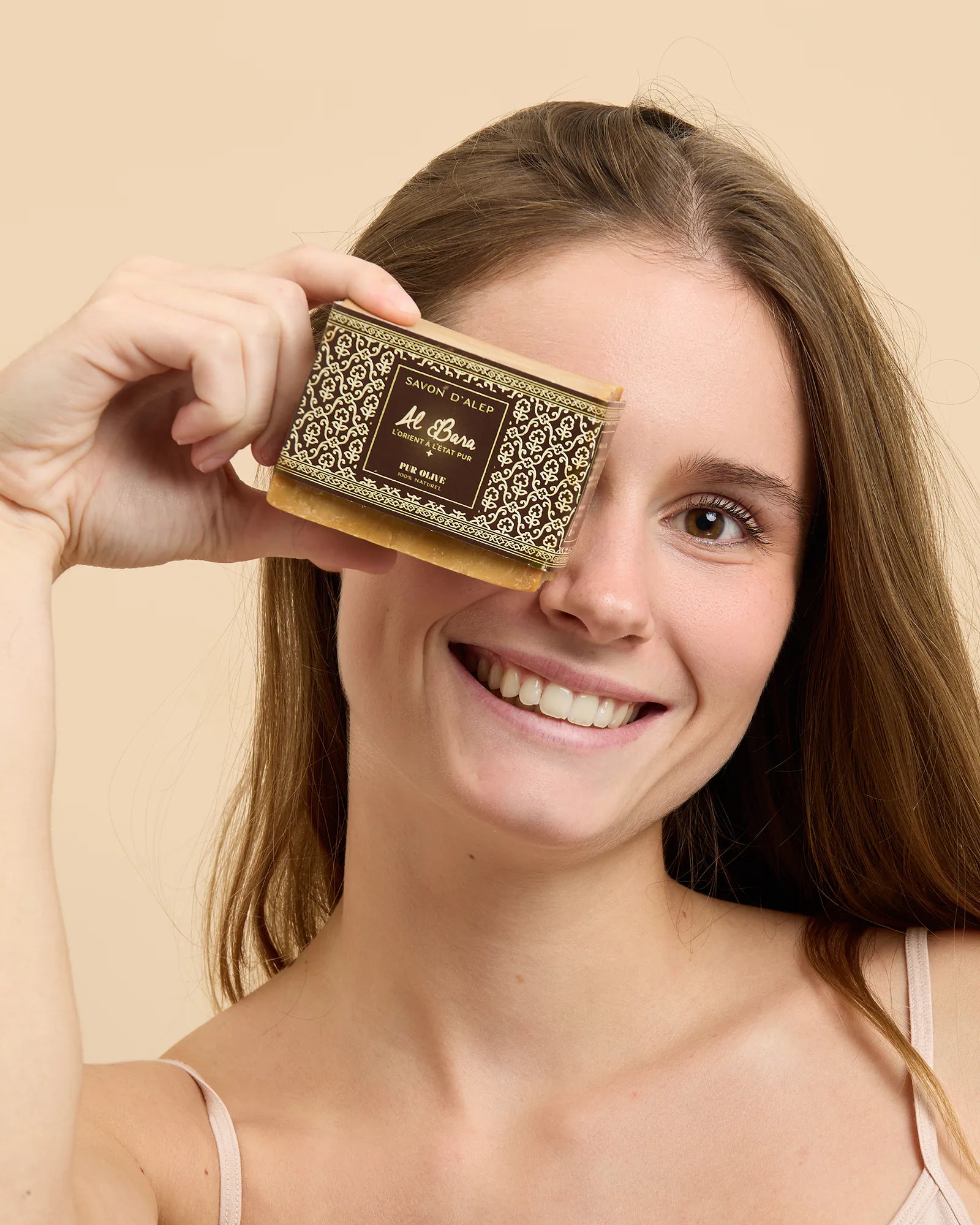
Choose Pure Olive, not a laurel soap. Pure Olive Aleppo soap is made without laurel berry oil. It is the simplest and richest of the range, and therefore the least likely to trigger reactivity.
Do a tolerance test. Apply the lather to a small area, in the crook of the elbow, and wait forty-eight hours before going further.
Outside flare-ups only, and on skin that has been calm for several days.
Lather between your hands and apply the foam. Never rub the bar on the skin.
Rinse thoroughly with lukewarm water, never hot, and pat dry.
Apply your emollient immediately afterwards, on still slightly damp skin. This is the step that matters most, and it holds whatever soap you use.
Once a day at most, and stop at the first sign of persistent discomfort.
Talk to your dermatologist before changing an established skincare routine.
Frequently asked questions
Does Aleppo soap relieve eczema?
No. It neither relieves nor changes eczema. At best, it cleanses without introducing fragrance or preservatives. Symptom relief comes from emollients and from the treatment prescribed by your doctor.
Can Aleppo soap make eczema worse?
Yes, it is possible, particularly during a flare-up or on very dry skin. Its alkaline pH can increase dryness and discomfort. If you notice a worsening after introducing it, stop and consult.
Which Aleppo soap to choose with atopic skin?
Pure Olive, without laurel berry oil, outside flare-ups, and after asking your dermatologist. Avoid high laurel percentages, whose purifying action is more marked.
Is Aleppo soap suitable for a baby with eczema?
That is a question for your paediatrician, not for us. An infant's skin is thinner and more permeable than an adult's, and atopic skin adds further fragility. We do not recommend Aleppo soap in this situation without prior medical advice.
Why do you sell a product you do not recommend for eczema?
Because Aleppo soap is a toilet soap, not a dermatological product, and the vast majority of our customers do not have eczema. We would rather clearly delimit what it does than let anyone believe it answers everything.