
Washing your hair with Aleppo soap: how to do it, by hair type
Aleppo soap replaces shampoo, on three conditions: choose the right laurel percentage, apply it as a lather and never by rubbing the bar on your head, and finish with an acidic rinse. Without that last step, hair feels waxy — and it is not the soap's fault, it is your water.
What Aleppo soap does — and does not do — for hair
Better to be clear before starting, because most people who give up do so because of a miscalibrated expectation.
What it does. It cleans the scalp without sulphates, silicones or preservatives. Laurel berry oil purifies and soothes irritated or itchy scalps; olive oil provides a superfat that avoids the stripped feeling. A single bar replaces shampoo, and often shower gel — we detail all its benefits for skin and hair in a dedicated guide.
What it does not do. It is not a treatment. It does not detangle, it does not repair a damaged fibre, it does not replace a mask on very dry or bleached hair. It leaves no coating agent — that is precisely the point, but it means the feel is different from a conventional shampoo, especially in the first weeks.
Washing your hair with Aleppo soap: the step-by-step method
This is where it all plays out. Technique matters more than the choice of soap.
1. Wet thoroughly with lukewarm water. Never hot: hot water opens the cuticles and accentuates the rough feel when drying.
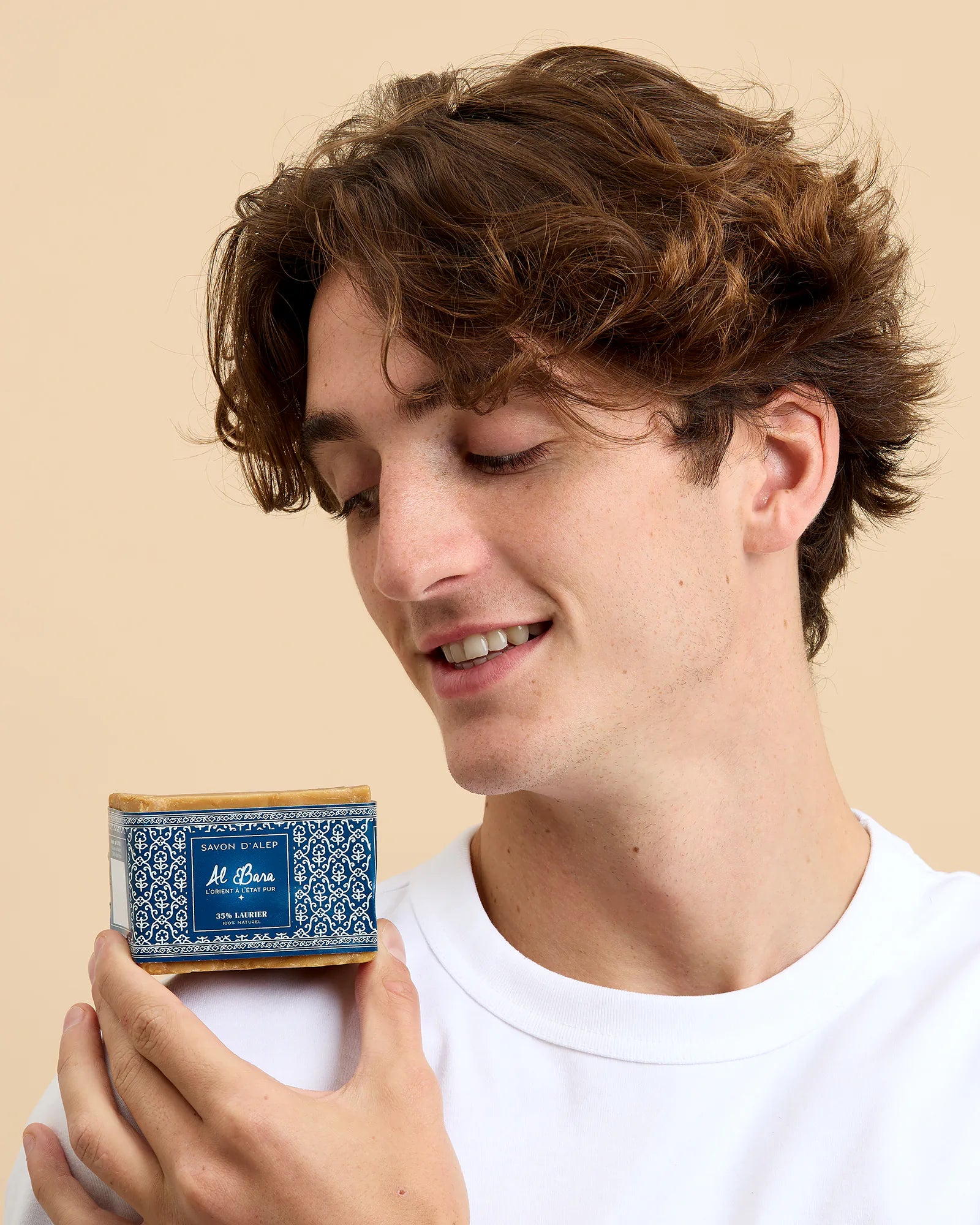
2. Lather the bar between your hands. Never rub the soap directly on the scalp. The gesture is abrasive and deposits too much material in one place — the number one cause of waxy strands. Build a generous lather in your palms, then apply it.
3. Massage the scalp, not the lengths. With your fingertips, in circular movements, for thirty to sixty seconds. The lengths clean themselves with the lather that runs down when rinsing. Working on them dries them out needlessly.
4. Rinse for a long time — longer than you think. Count twice the time of a regular shampoo. Unrinsed soap residue is the second cause of heavy, dull hair. Run your hand through the roots: if it “squeaks” slightly, it is clean; if it still slides, keep rinsing.
5. Finish with an acidic rinse. Non-negotiable, at least during the first weeks. That is the subject of the next section.
6. Dry without rubbing. Pat with a towel, then air-dry if you can. A hot hairdryer accentuates the rough feel during the transition.
The acidic rinse: the step nobody should skip
Aleppo soap has an alkaline pH, between 9 and 10, like every true soap. Your hair, on the other hand, is slightly acidic. An acidic rinse closes the cuticles, brings the shine back and neutralises the limescale deposit we discuss just below.
The recipe: one tablespoon of cider vinegar in 250 ml of cold water, plus a few drops of Al Bara rose water if the smell bothers you. Pour over the whole head of hair, leave for thirty seconds, do not rinse. The vinegar smell disappears entirely on drying.
Diluted lemon juice works too. To understand why the pH gap is not a problem in itself, we explain it in detail in our article on the pH of Aleppo soap.
Why your hair turns waxy — and how to fix it
This is disappointment number one, and it almost always has an identifiable cause. In the vast majority of cases, it is not the soap.
Hard water, the real culprit
A soap is a fatty-acid salt. In contact with water rich in calcium and magnesium — the case across much of France — it reacts and forms an insoluble deposit: what is known as soap scum. On a basin, that gives the white marks. On a hair, it gives that waxy, sticky feel that does not rinse away.
The acidic rinse dissolves this deposit. That is exactly why it is essential, and not just for shine. If your water is very hard, double the dose of vinegar, or do your final rinse with filtered or mineral water.
Soap applied directly to the head
Rubbing the bar on the scalp deposits an amount of material that rinsing cannot clear. Always go through the lather-between-the-hands step.
Too short a rinse
Without a synthetic rinsing agent, removing the soap takes more water and more time than a commercial shampoo. It is counter-intuitive, but it is the most often rushed step.
Which Aleppo soap for your hair type
The laurel oil percentage determines the soap's character. The higher it is, the more marked the purifying action; the lower it is, the more nourishing the soap.
Oily hair and oily-prone scalp
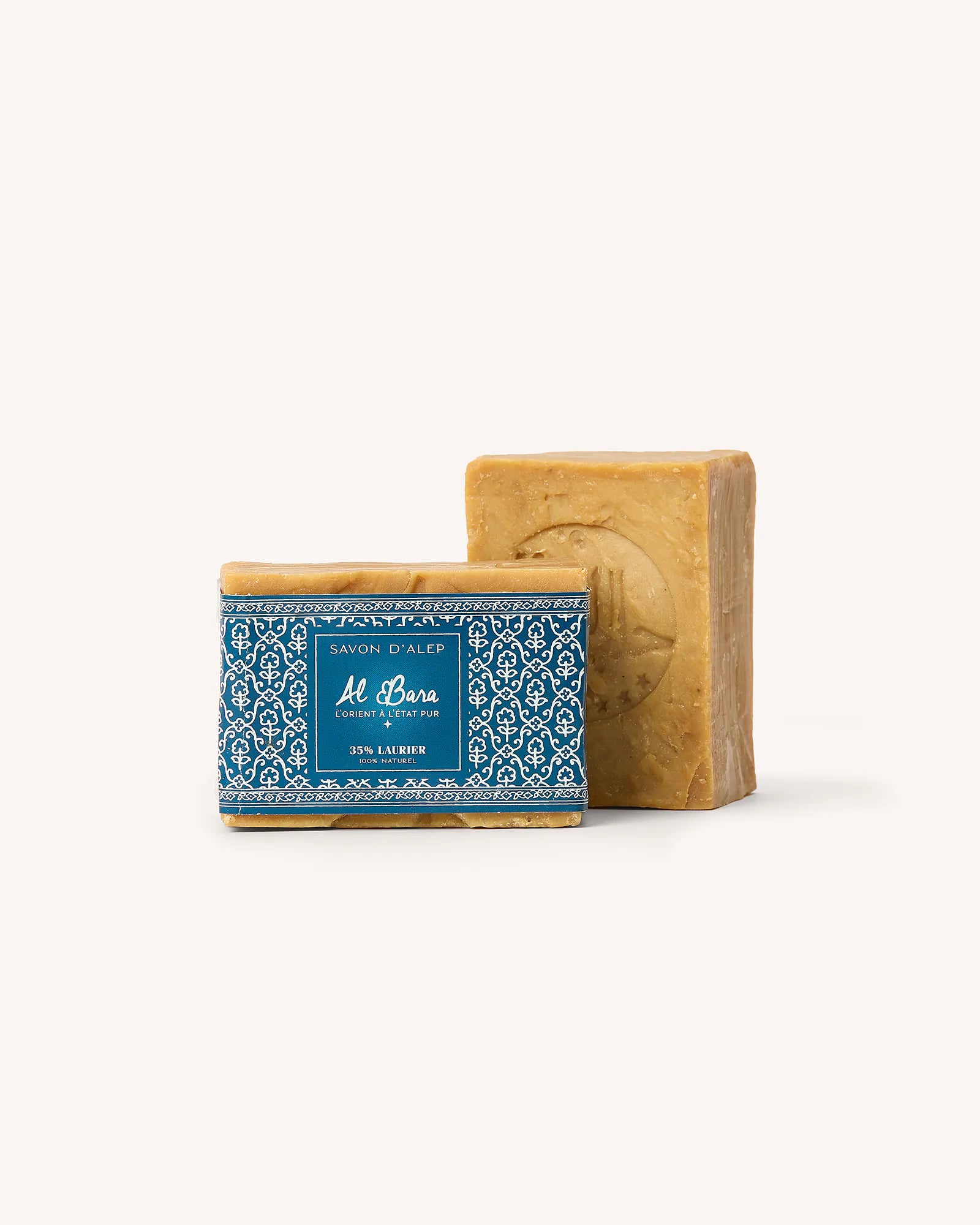
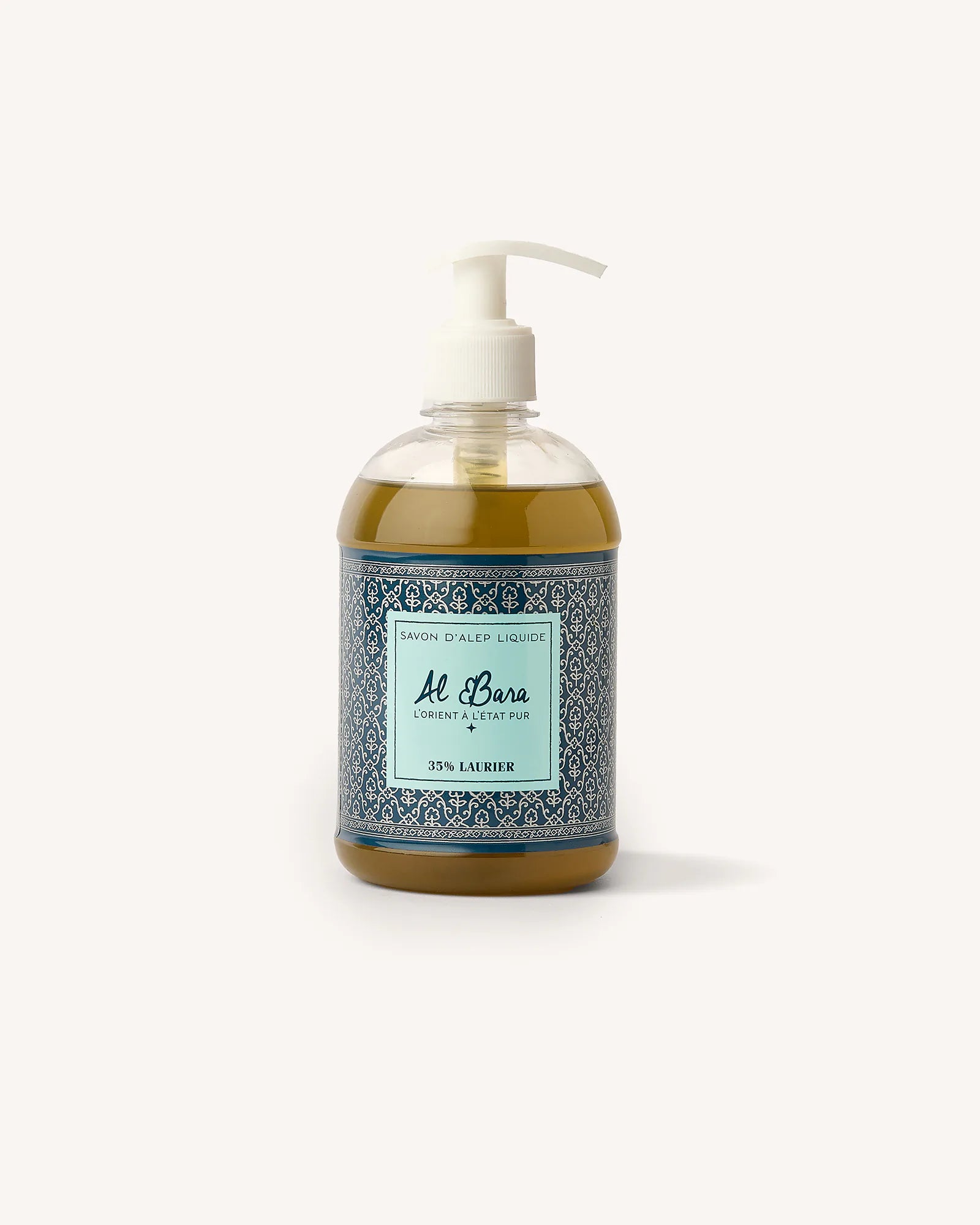
Aleppo soap 35% Laurel. Its laurel oil concentration helps regulate sebum production without the rebound effect of very detergent shampoos. This is the hair use where Aleppo soap gives the clearest results.
Scalp prone to dandruff or itching
The 35% Laurel as well. The natural antifungal properties of laurel oil are studied for their action on Malassezia, the yeast involved in oily dandruff. Aleppo soap can help limit its development and soothe itching — without replacing a dermatological treatment if dandruff is severe or accompanied by lesions.
Normal to combination hair
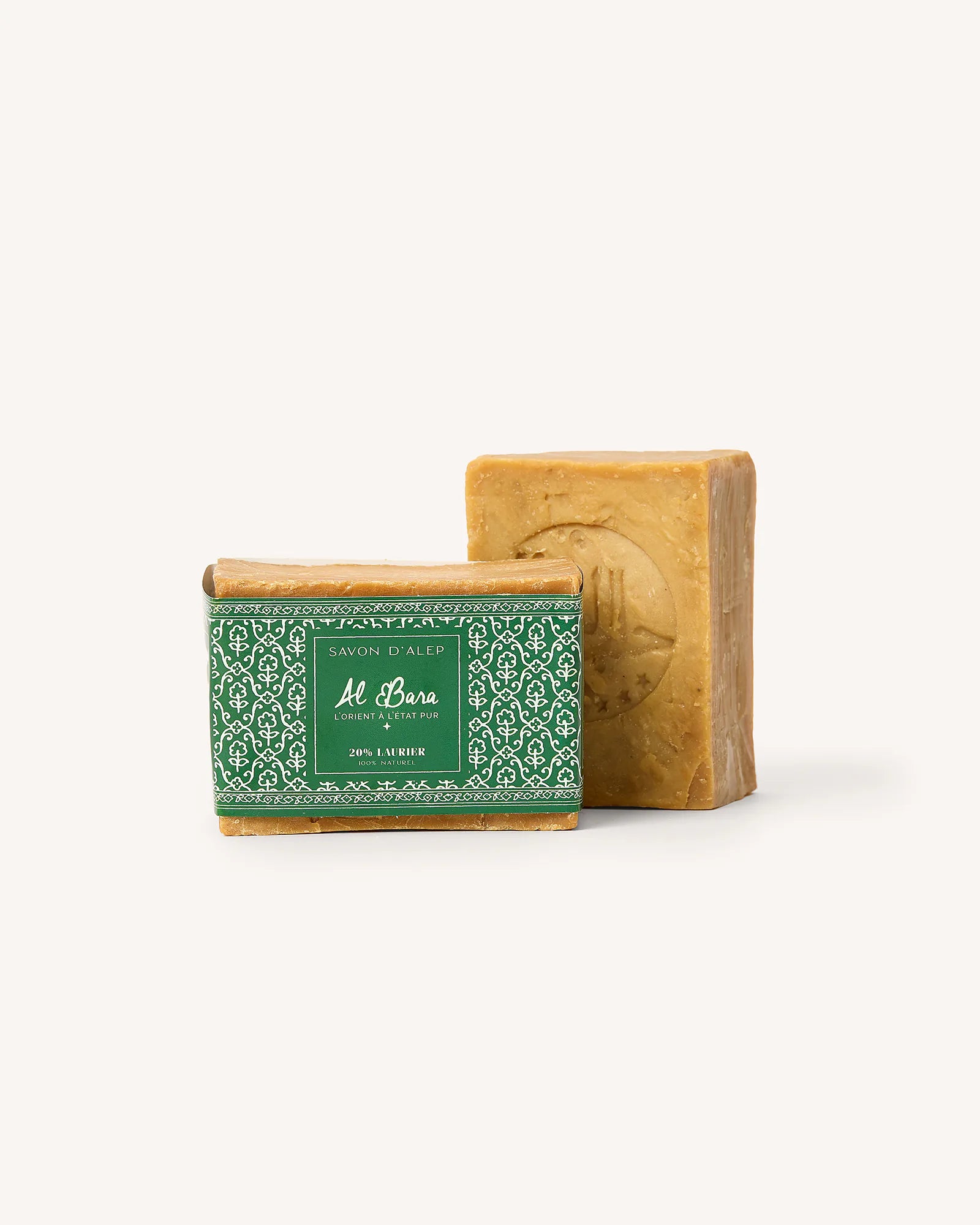
Aleppo soap 20% Laurel. The balance between cleansing and gentleness, and the best starting point if you are beginning the transition. It is also the one for the whole family.
Dry, curly or coily hair
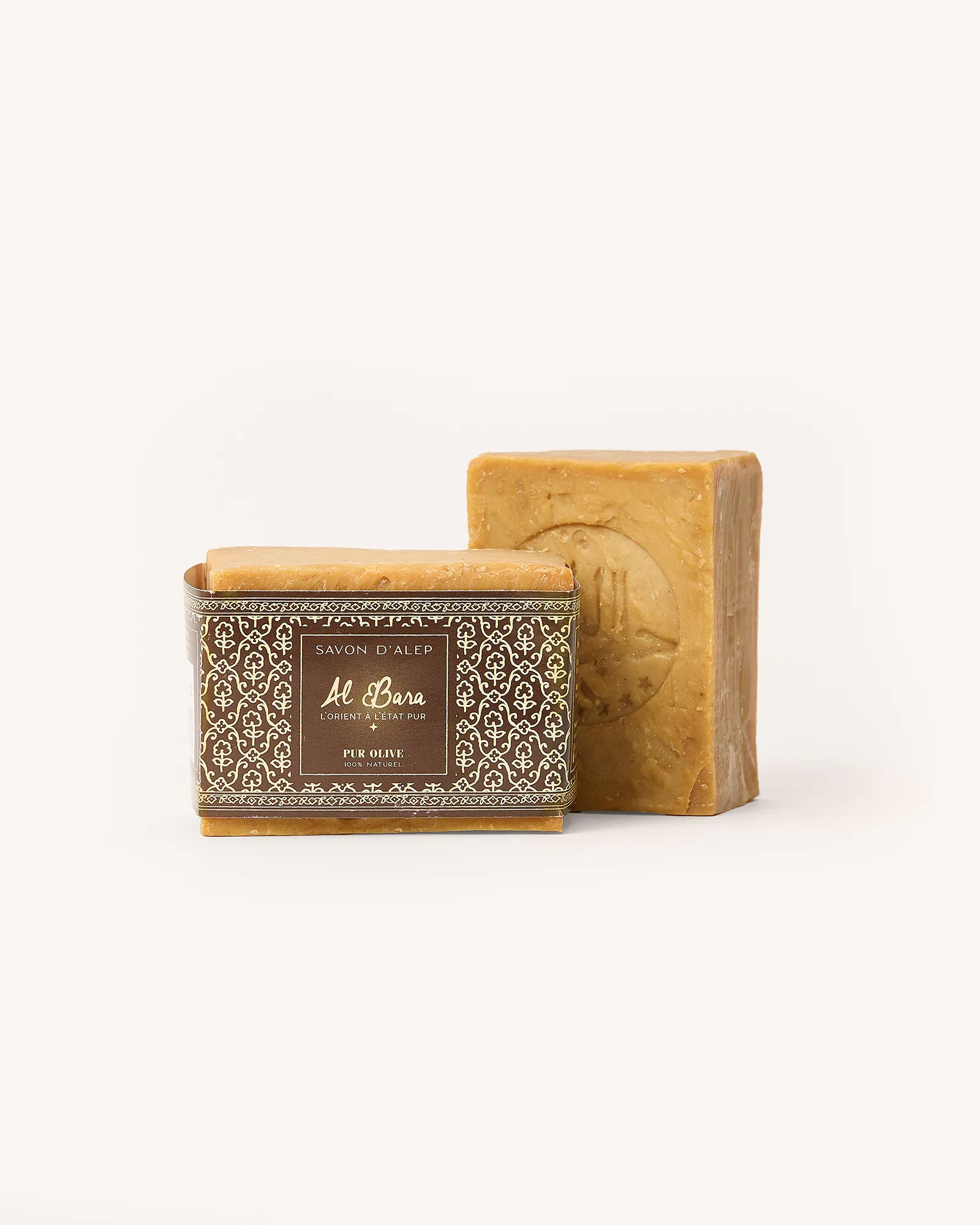
Pure Olive Aleppo soap, without laurel oil, rich in oleic acid. On curly or coily hair, keep it for the scalp and add a nourishing treatment on the lengths: Aleppo soap cleans, it does not hydrate the fibre. Space out washes; once a week is often enough.
Coloured hair
The 20% Laurel or Pure Olive. Unlike sulphates, Aleppo soap does not attack colour. Still, do a test on a discreet strand after a recent colouring, and wait a week after a visit to the hairdresser.
The transition period: what to expect
Count between three and eight washes. During this phase, the scalp rebalances a sebum production previously stimulated by sulphate surfactants. Hair may feel heavier, rougher, sometimes oilier than before.
This is the phase where most people give up, often two washes before it turns around. Three markers to get through it: apply the acidic rinse rigorously at every wash, gradually space out shampoos, and do not judge the result before the fifth wash. If beyond eight washes the hair is still waxy, the problem is almost always hard water or rinsing — go back to the previous section before giving up.
Frequently asked questions
How often should you wash your hair with Aleppo soap?
Twice a week for oily hair, once for normal to dry hair. Aleppo soap does not call for daily washing: by spacing out, you let the scalp find its natural rhythm again, which is precisely the goal.
Does Aleppo soap make hair fall out?
No. Nothing links Aleppo soap to hair loss. Shedding perceived during the first weeks most often corresponds to hairs already at the end of their cycle, which come away on detangling because no silicone holds them any more. If significant loss persists, it has another cause and calls for medical advice.
How long before you see a result?
The scalp reacts quickly, often from the first washes for itching. The look of the hair, though, requires getting through the transition: judge from the fifth wash, not before.
Can children's hair be washed with Aleppo soap?
Yes, with Pure Olive or 20% Laurel from the age of three, making sure the lather does not reach the eyes. For younger children, ask your paediatrician.
Is a conditioner needed?
The acidic rinse plays that role on normal to oily hair. On dry, curly or coily hair, add a nourishing treatment on the lengths: Aleppo soap does not have that function.
Read more
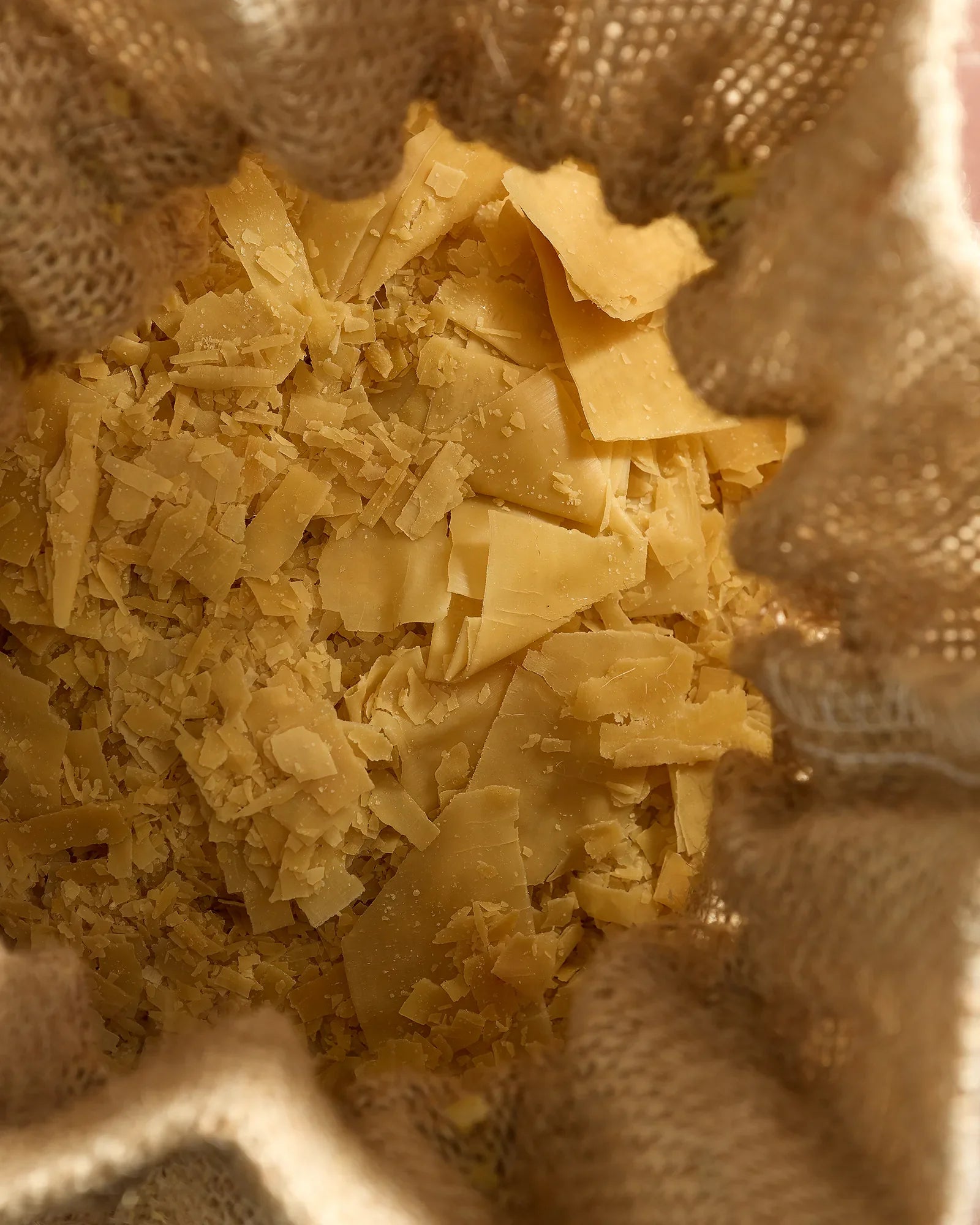
A natural liquid laundry detergent in 4 steps with Aleppo soap flakes: the traditional recipe, a comparison with Marseille soap, and tips from Aleppo.
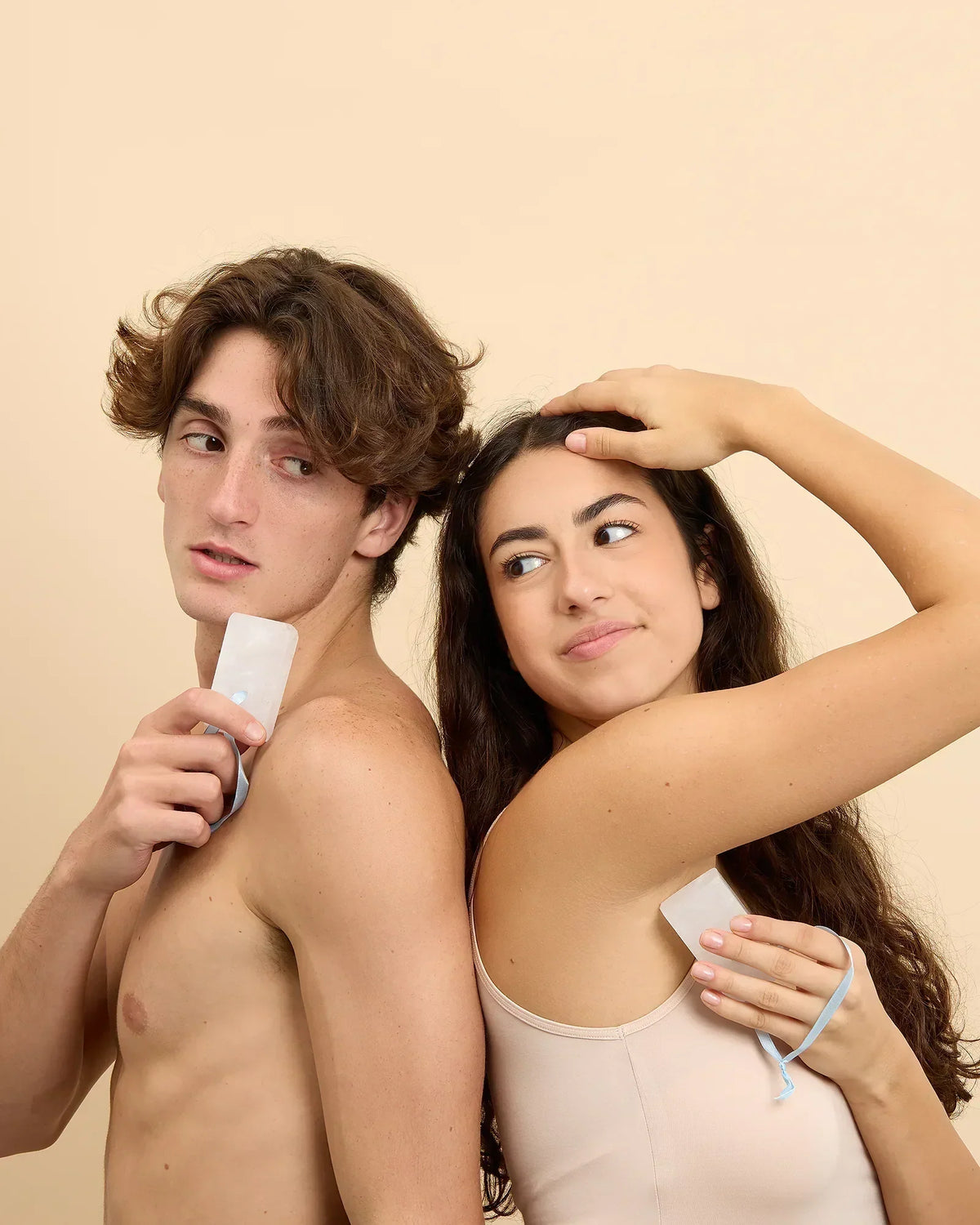
Is alum stone aluminum-free? Is it effective against perspiration? All the clear answers about this ancient natural deodorant used since antiquity.