
5,000 Years of Expertise: The Fascinating Story of Aleppo Soap
Before shampoos, before shower gels, before Marseille soap — there was Aleppo soap. Born in the Syrian city that gives it its name, it is considered the oldest soap in the world still made according to its original formula.
Its origins: Mesopotamia and the Fertile Crescent
The first documented traces of soap making date back to 3000 BC in Mesopotamia. It was in Aleppo, in the heart of the Syrian Fertile Crescent, that what we now call Aleppo soap truly originated. Two local natural resources make it unique: the ancient olive groves and the laurel forests whose berries produce a precious oil.
It is said that the Crusaders brought Aleppo soap back to Europe in the 11th century, where it gave rise to Marseille soap and Castile soap.
The traditional manufacturing process
The manufacturing of Aleppo soap follows a calendar dictated by the seasons:
- Between November and January — cooking: Manufacturing can only take place during the coldest months of the year. The oils are cooked for several days in large cauldrons according to the traditional saponification process. Laurel berry oil is added at the end of cooking.
-
Pouring: The soap paste is then poured onto the floor of the soap factory and spread evenly. It is left to cool to solidify.
- Cutting: Once firm enough, the soap is cut by hand into regular bars.
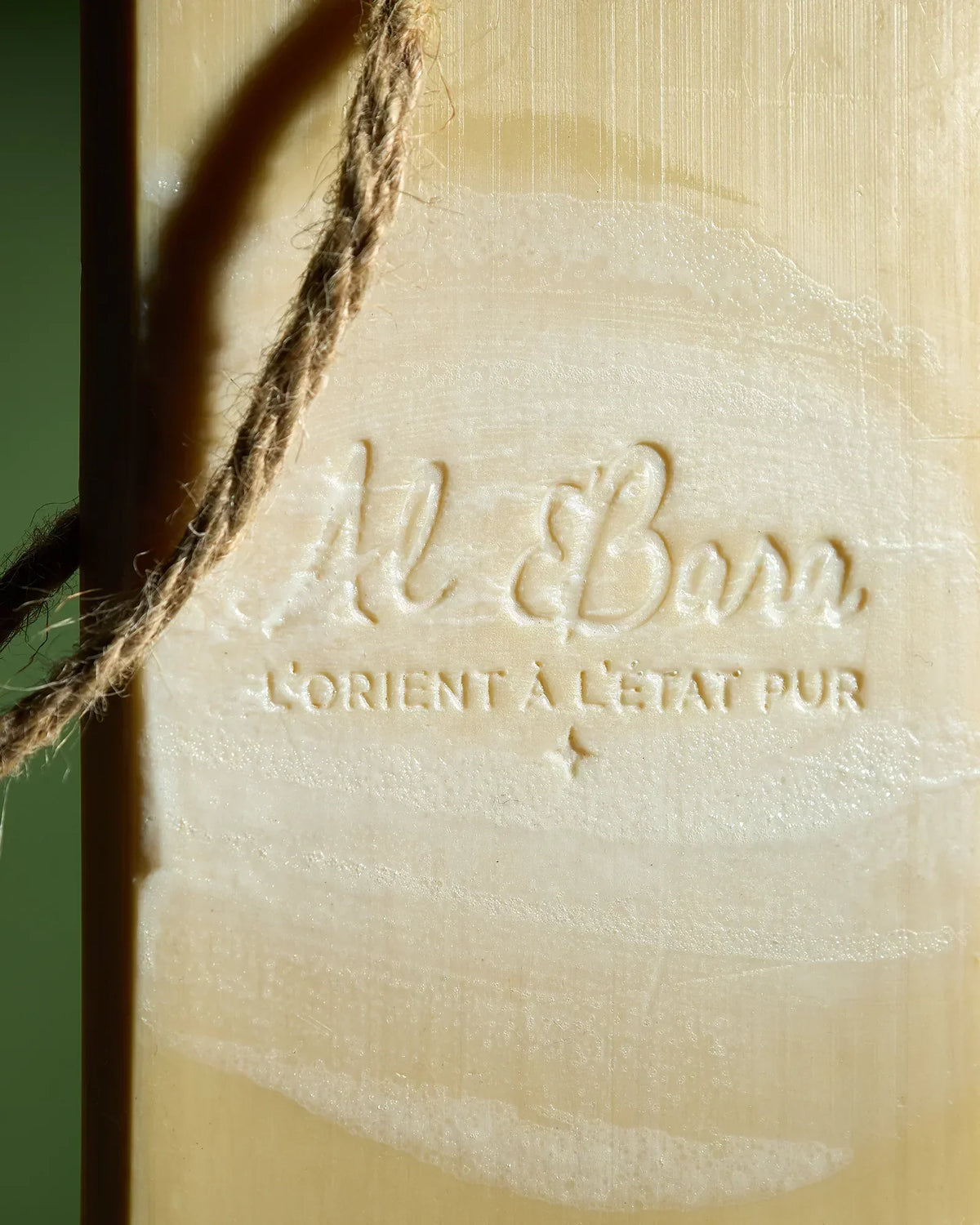
- Stamping: Each bar is then stamped with the manufacturer's seal, a true signature guaranteeing its authenticity.
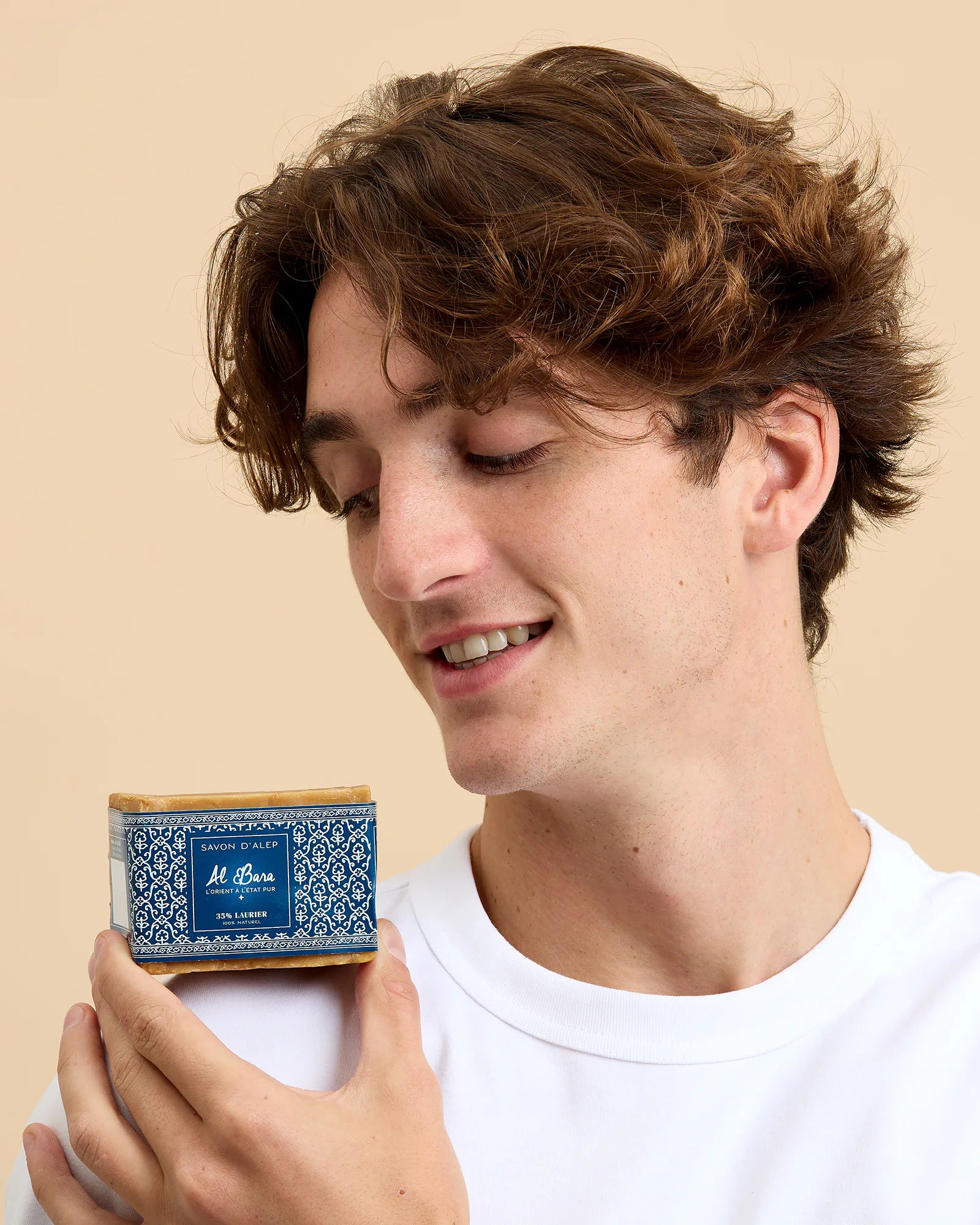
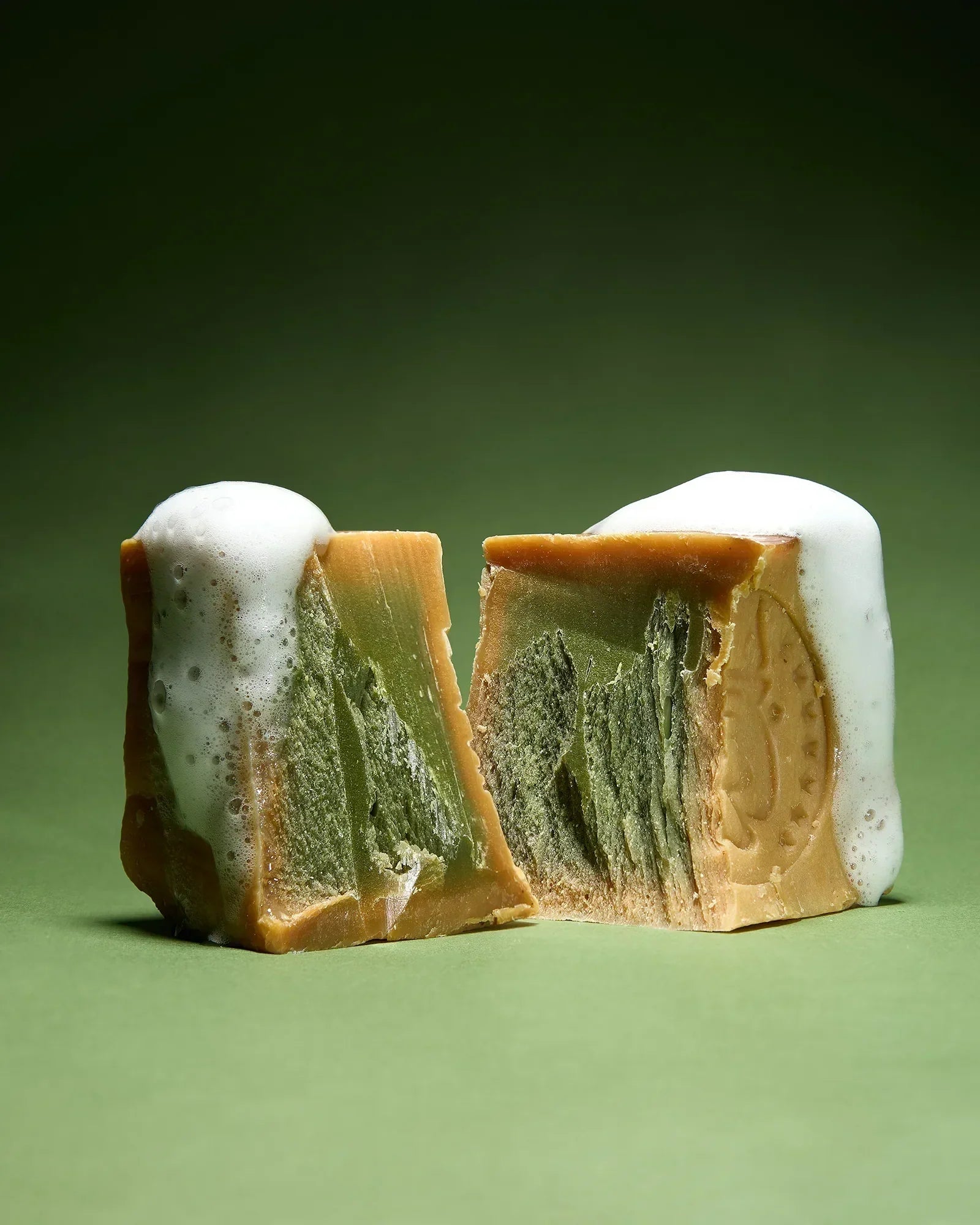
- Drying: The soaps are stacked in airy towers and left to dry for a minimum of nine months. During this long maturation, their surface naturally acquires its golden-brown color while their core retains its characteristic green hue.
This last step is essential because it gives Aleppo soap all its quality, softness, and longevity.
What distinguishes true Aleppo soap
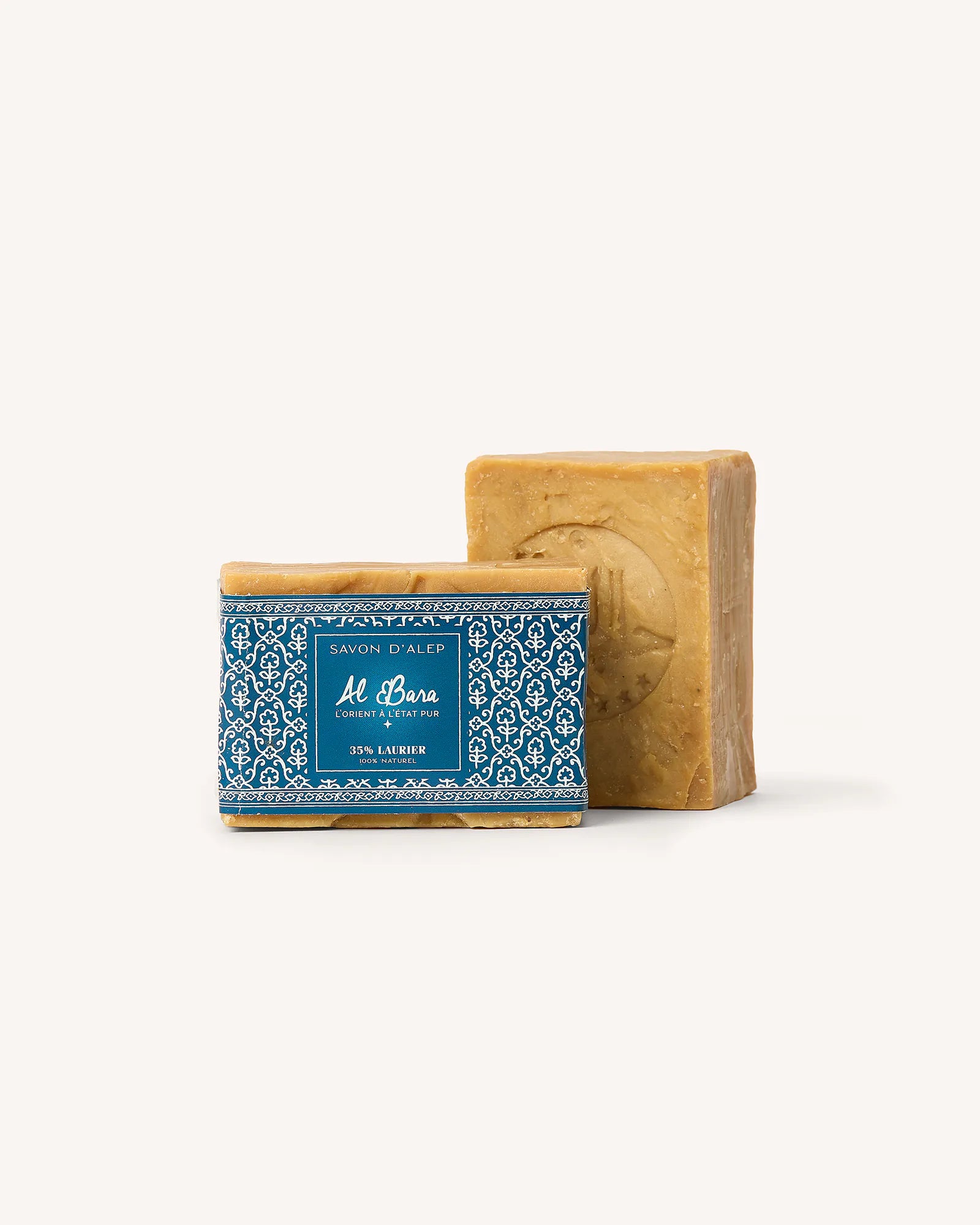
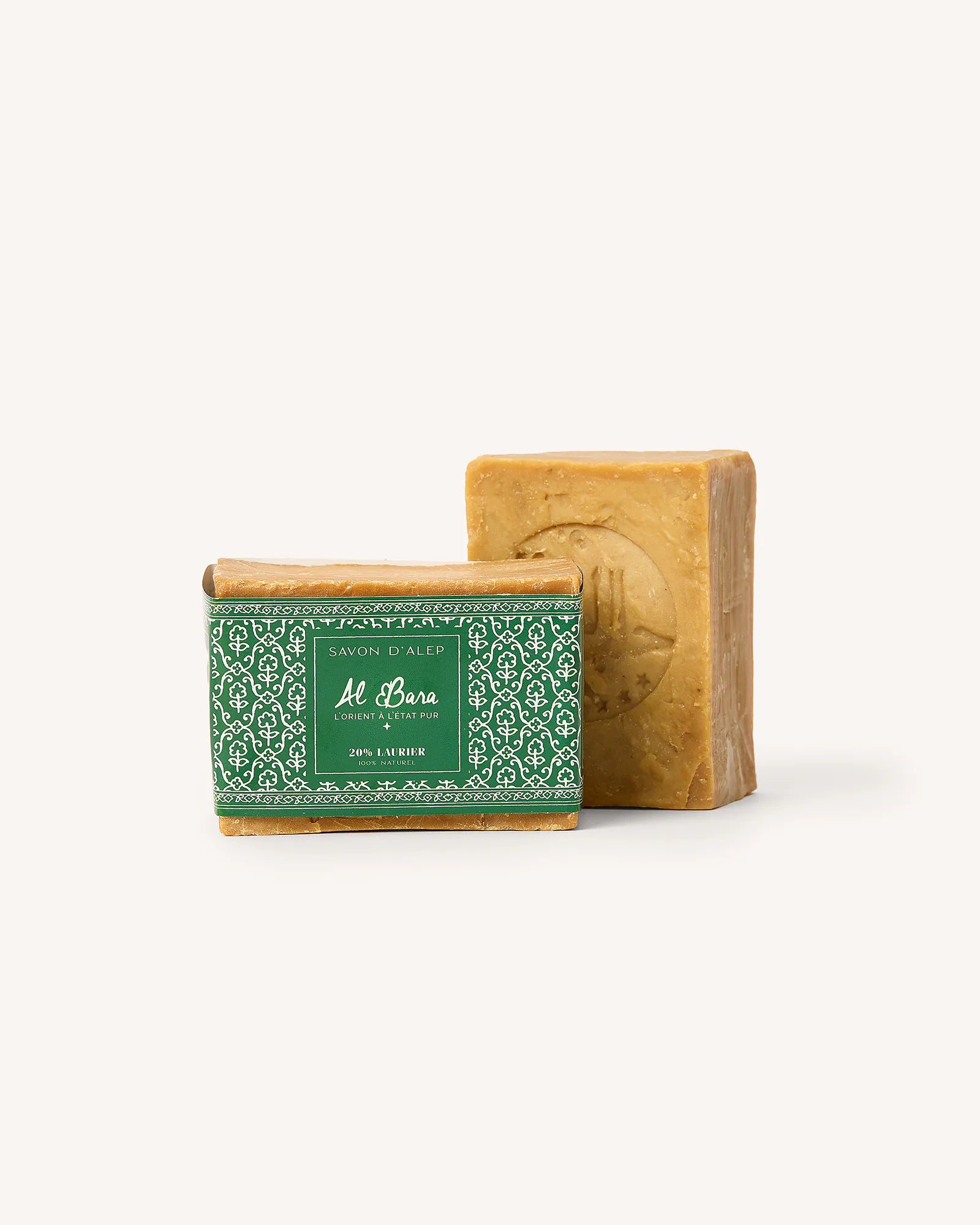
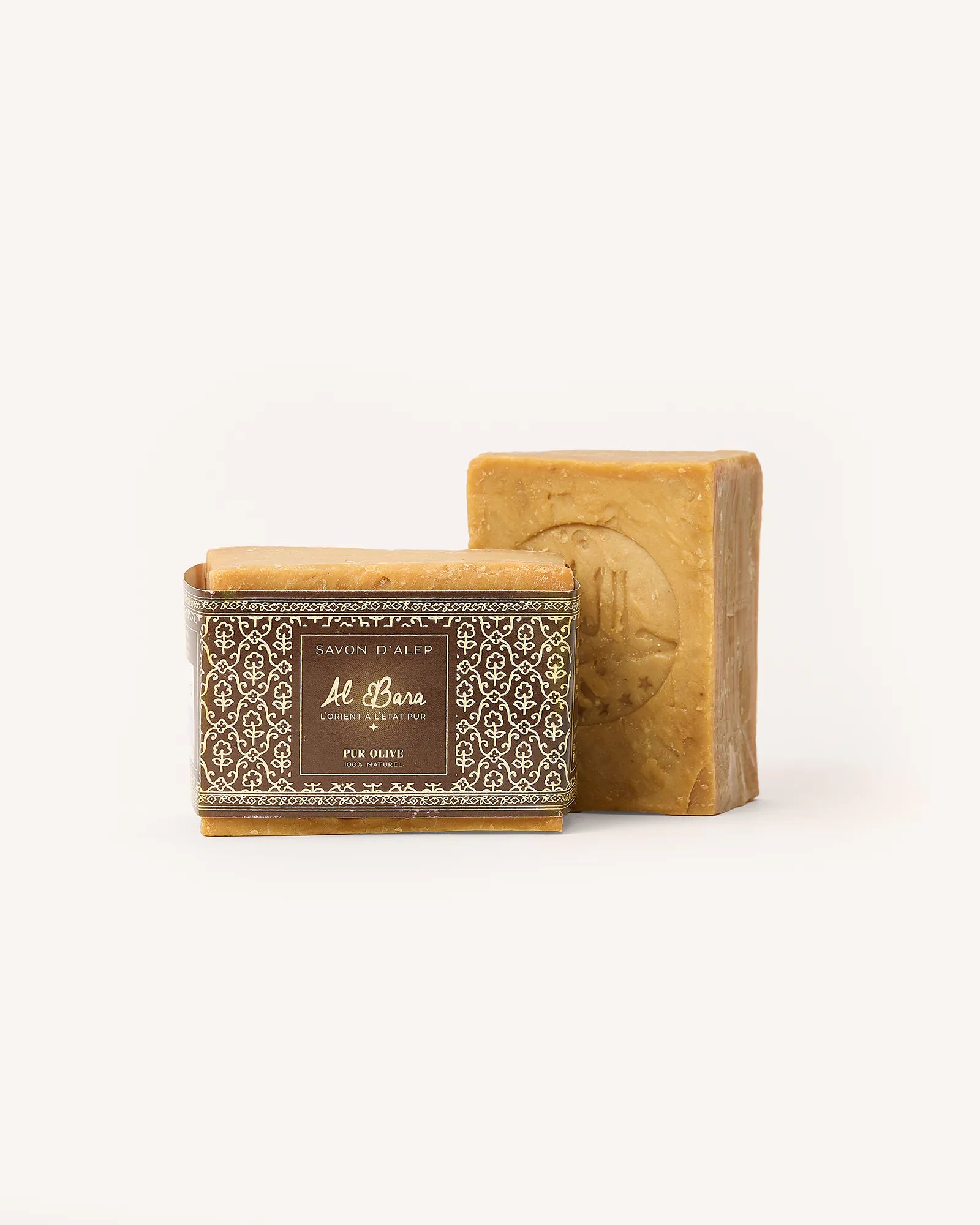
- Only three ingredients: olive oil, laurel berry oil, and vegetable soda
- Brown outer surface and green interior
- Woody and herbaceous scent, slightly medicinal
- INCI list: Olea Europaea Fruit Oil, Laurus Nobilis Berry Oil, Aqua, Sodium Hydroxide
This ancient recipe also explains what this soap brings to the skin: discover the benefits of Aleppo soap.
Al Bara: perpetuating tradition
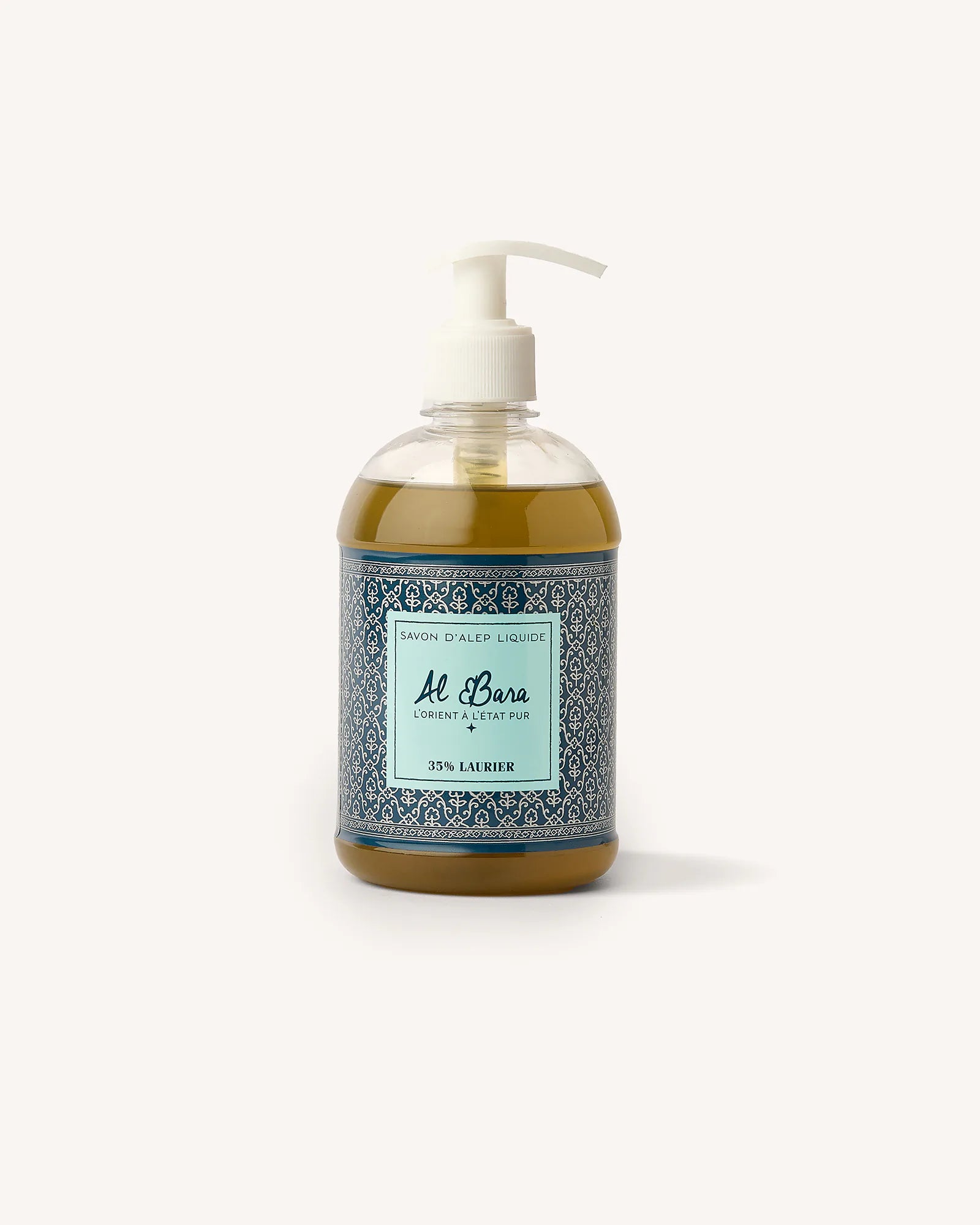
Al Bara — whose name means “the innocent” or “the pure” in Arabic — was founded with the mission of perpetuating this ancient know-how. Each Al Bara soap is made in Aleppo according to the ancestral method, aged before marketing to guarantee quality and authenticity.
Read more
What is the difference between a 20% and 35% laurel Aleppo soap? Which percentage should you choose for your skin type? The illustrated guide to making the right choice the first time.
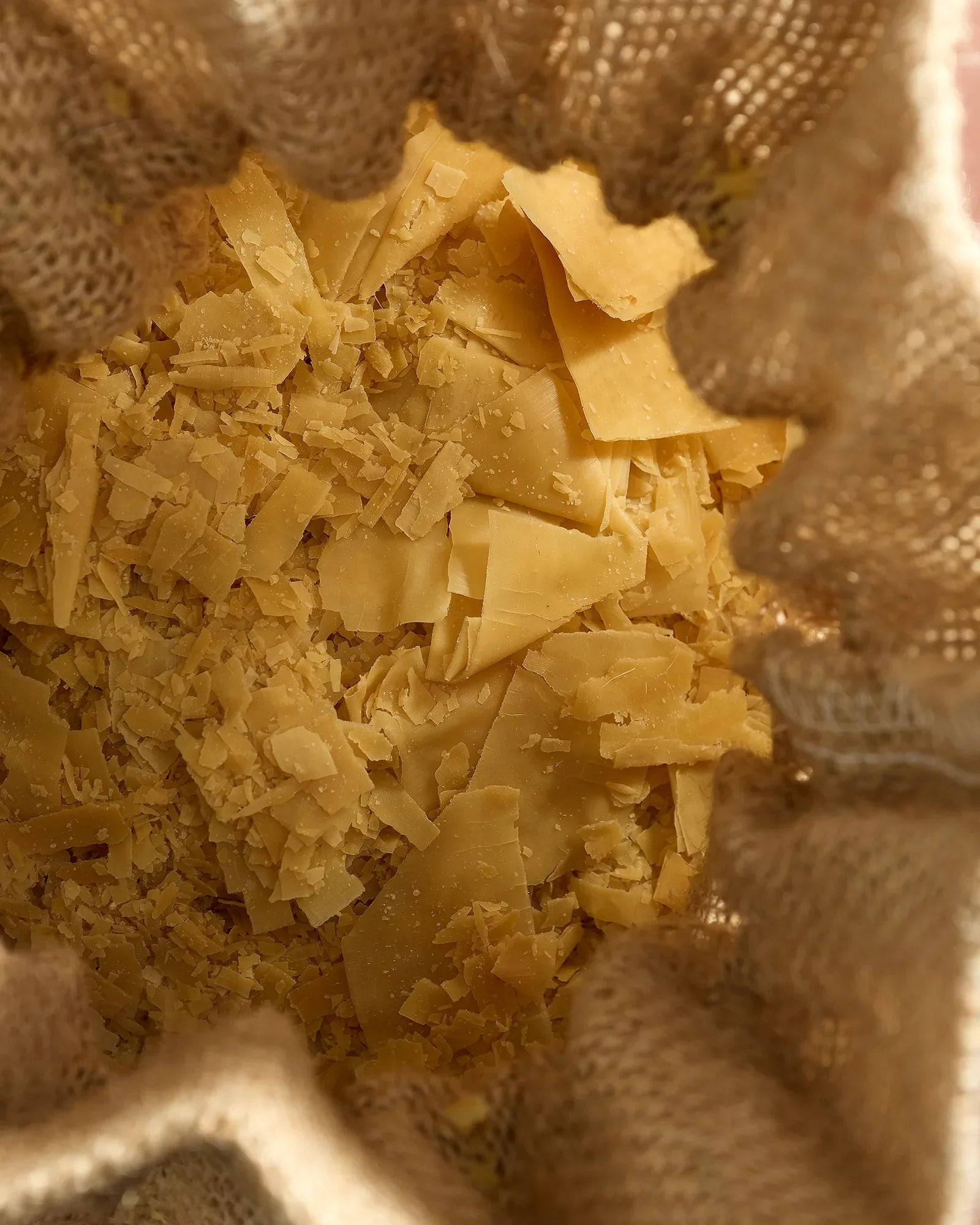
A natural liquid laundry detergent in 4 steps with Aleppo soap flakes: the traditional recipe, a comparison with Marseille soap, and tips from Aleppo.